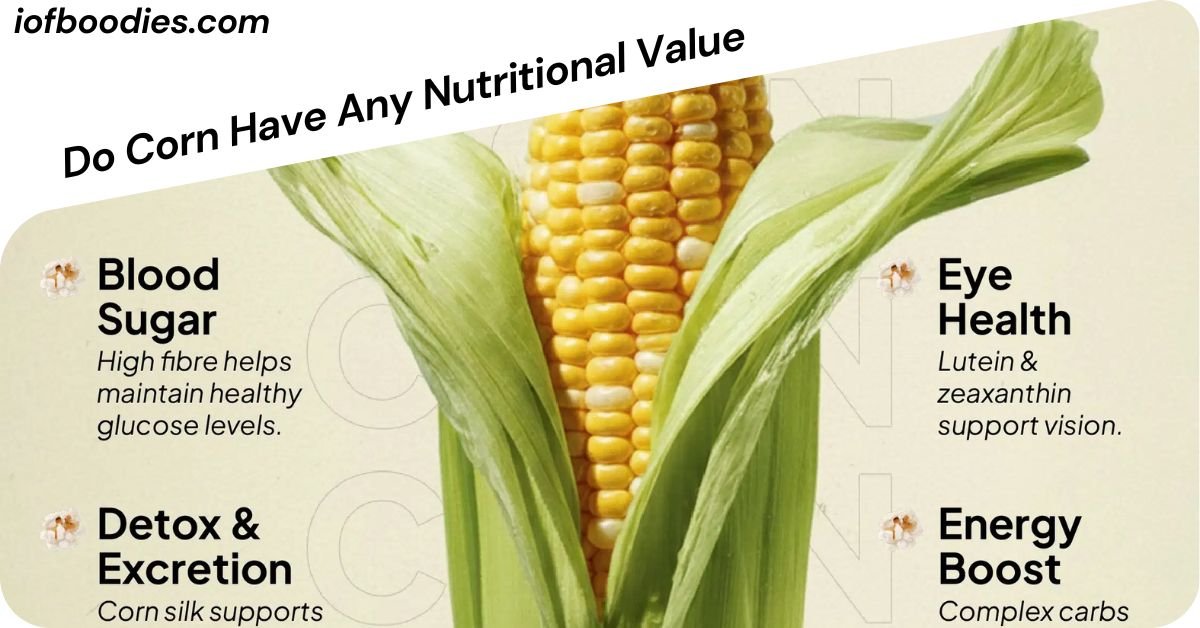
Do Corn Have Any Nutritional Value? A Complete Guide to Corn Nutrition, Health Benefits, and Facts
Corn is one of the most widely consumed foods in the United States and around the world. It appears in many forms, including sweet corn, corn on the cob, popcorn, cornmeal, tortillas, corn chips, breakfast cereals, and processed foods. Despite its popularity, many people still ask an important question: do corn have any nutritional value?
The simple answer is yes. Corn contains several essential nutrients that support overall health. It provides carbohydrates for energy, dietary fiber for digestion, vitamins for body functions, minerals for bone and heart health, and antioxidants that help protect cells from damage.
However, the nutritional value of corn depends on how it is prepared and consumed. Fresh corn offers different benefits compared to processed corn products. Understanding these differences can help you make healthier dietary choices.
This comprehensive guide explores everything you need to know about the question “do corn have any nutritional value,” including nutritional facts, health benefits, potential drawbacks, comparisons with other vegetables, and answers to common questions.
What Is Corn?
Corn, also known as maize, is a cereal grain that originated thousands of years ago in Central America. Today, it is one of the world’s most important crops and serves as a staple food for millions of people.
Corn can be consumed in several forms:
- Sweet corn
- Corn on the cob
- Frozen corn
- Canned corn
- Popcorn
- Cornmeal
- Corn flour
- Corn tortillas
- Corn cereals
- Corn snacks
Because it is versatile and affordable, corn plays a significant role in modern diets.
Do Corn Have Any Nutritional Value? The Direct Answer
Many people mistakenly believe corn is simply a starchy vegetable with little nutritional benefit. In reality, corn contains a variety of nutrients that contribute to good health.
Corn provides:
- Energy-producing carbohydrates
- Dietary fiber
- Protein
- B vitamins
- Vitamin C
- Magnesium
- Potassium
- Phosphorus
- Antioxidants
The nutritional profile makes corn much more than just a filler food. While it may not be as nutrient-dense as leafy greens, it still offers valuable nutrients that support overall wellness.
Nutritional Facts of Corn
A typical one-cup serving of cooked sweet yellow corn contains approximately:
- Calories: 140–150
- Carbohydrates: 31 grams
- Fiber: 4–5 grams
- Protein: 5 grams
- Fat: 2 grams
- Vitamin C: 10% of Daily Value
- Thiamin (Vitamin B1): 24% of Daily Value
- Folate: 12% of Daily Value
- Magnesium: 11% of Daily Value
- Potassium: 8% of Daily Value
These values may vary depending on the variety and preparation method.
Understanding the Main Nutrients in Corn
Carbohydrates
Corn is primarily a carbohydrate-rich food. Carbohydrates are the body’s preferred source of energy.
The carbs in corn fuel:
- Brain function
- Muscle activity
- Physical performance
- Daily energy needs
For active individuals, corn can be an excellent source of sustained energy.
Dietary Fiber
Fiber is one of corn’s most valuable nutrients.
Benefits of fiber include:
- Improved digestion
- Better gut health
- Reduced constipation
- Increased fullness
- Better blood sugar management
A diet rich in fiber is associated with improved long-term health outcomes.
Protein
Although corn is not considered a high-protein food, it contributes modest amounts of plant-based protein.
Protein helps:
- Build muscles
- Repair tissues
- Produce enzymes
- Support immune function
Combining corn with beans or legumes creates a more complete protein source.
Healthy Plant Compounds
Corn contains several beneficial plant compounds that support health.
These include:
- Lutein
- Zeaxanthin
- Ferulic acid
- Anthocyanins (in colored corn varieties)
These compounds act as antioxidants in the body.
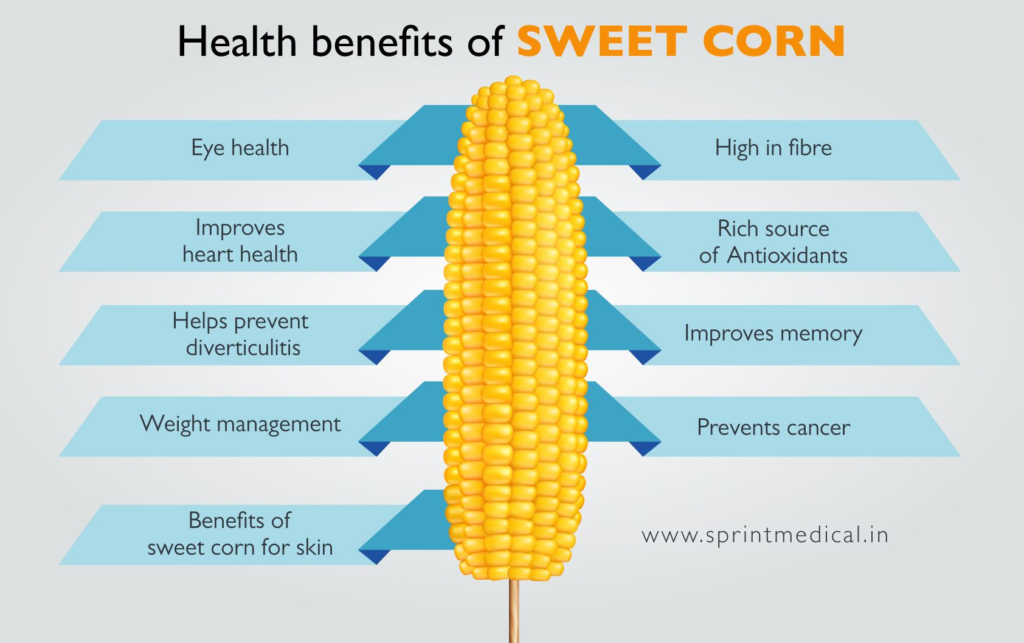
Health Benefits of Corn
Supports Eye Health
One of the most overlooked benefits of corn is its role in eye health.
Corn contains lutein and zeaxanthin, two antioxidants that accumulate in the retina.
Research suggests these compounds may help:
- Protect vision
- Reduce oxidative stress
- Support healthy aging of the eyes
- Lower the risk of age-related eye problems
Yellow corn typically contains higher levels of these antioxidants.
Promotes Healthy Digestion
The fiber in corn supports a healthy digestive system.
Fiber helps:
- Add bulk to stool
- Support regular bowel movements
- Feed beneficial gut bacteria
- Improve digestive comfort
People who consume adequate fiber often experience better digestive health.
Provides Long-Lasting Energy
Corn’s complex carbohydrates provide gradual energy release.
Unlike highly processed sugary foods, whole corn products can help maintain energy levels for longer periods.
This makes corn a practical food choice for:
- Students
- Athletes
- Workers with physically demanding jobs
- Active families
Supports Heart Health
Corn contains nutrients that contribute to cardiovascular health.
These include:
- Fiber
- Potassium
- Magnesium
- Antioxidants
Together, these nutrients may support healthy blood pressure and overall heart function.
Helps Maintain Healthy Weight
Corn can be part of a healthy weight-management plan.
The fiber content promotes satiety, helping people feel full for longer.
When consumed in reasonable portions, corn can help reduce unnecessary snacking between meals.
Is Corn a Vegetable or a Grain?
Many people are confused about corn’s classification.
The answer depends on when it is harvested.
When harvested fresh, corn is considered a starchy vegetable.
When harvested dry, it is classified as a grain.
This unique characteristic makes corn one of the most versatile foods in agriculture.
How Corn Compares to Other Vegetables
Compared to leafy greens, corn contains:
- More calories
- More carbohydrates
- Less vitamin K
- Less vitamin A
However, compared to many starchy foods, corn provides:
- More fiber
- More antioxidants
- More vitamins and minerals
Rather than comparing foods as “good” or “bad,” it is better to view corn as one valuable component of a balanced diet.
Also Read: Can of Coca Cola Nutrition: Complete Guide to Calories, Sugar, Ingredients, and Health Facts
Does Corn Cause Weight Gain?
A common myth is that corn automatically causes weight gain.
The truth is more complex.
Weight gain occurs when calorie intake consistently exceeds calorie expenditure.
Corn itself is not inherently fattening.
Problems often arise when corn is consumed as:
- Fried snacks
- Butter-covered side dishes
- Sugary cereals
- Highly processed foods
Whole corn consumed in moderation can fit into a healthy eating pattern.
Can People With Diabetes Eat Corn?
People with diabetes often wonder whether corn is safe.
Corn contains carbohydrates, so it can affect blood sugar levels.
However, whole corn also contains fiber, which helps slow digestion.
Many individuals with diabetes can enjoy corn as part of a balanced meal when:
- Portion sizes are controlled
- Protein is included
- Healthy fats are added
- Overall carbohydrate intake is monitored
Consulting a healthcare professional is always recommended for personalized guidance.
Fresh Corn vs Processed Corn
The nutritional value of corn changes significantly depending on processing.
Fresh Corn
Fresh corn typically offers:
- More natural nutrients
- Higher water content
- Better fiber retention
- Less added sodium
Processed Corn Products
Many processed corn products contain:
- Added salt
- Added sugars
- Artificial ingredients
- Extra calories
Choosing minimally processed corn products usually provides greater nutritional benefits.
Do Corn Nuts Have Any Nutritional Value?
Many consumers ask, do corn nuts have any nutritional value?
The answer is yes, but with limitations.
Corn nuts are made from roasted corn kernels and contain:
- Carbohydrates
- Fiber
- Small amounts of protein
- Certain minerals
However, many commercial corn nuts are also high in:
- Sodium
- Added flavorings
- Calories
While corn nuts can provide some nutrients, they should generally be viewed as a snack rather than a major source of nutrition.
Choosing lower-sodium varieties can improve their nutritional quality.
Do Corn Chips Have Any Nutritional Value?
Another common question is: do corn chips have any nutritional value?
Corn chips do contain some nutrients because they are made from corn.
Potential nutrients include:
- Carbohydrates
- Small amounts of fiber
- Trace minerals
However, most corn chips are highly processed and often contain:
- Excess sodium
- Added oils
- Extra calories
As a result, corn chips typically provide fewer health benefits than whole corn.
They can be enjoyed occasionally, but fresh or minimally processed corn remains the healthier choice.
Popcorn: One of the Healthiest Corn Foods
Popcorn is a whole-grain corn product.
Air-popped popcorn offers:
- Fiber
- Antioxidants
- Low calories
- High volume
Because of its filling nature, popcorn can be a healthy snack.
Problems occur when excessive amounts of:
- Butter
- Sugar
- Caramel
- Cheese flavoring
are added.
Plain popcorn remains one of the healthiest ways to enjoy corn.
Corn and Gut Health
Emerging research continues to highlight the importance of gut health.
Corn contributes to gut health through:
- Fiber
- Resistant starch
- Beneficial plant compounds
These components help nourish healthy gut bacteria.
A healthier gut microbiome is associated with:
- Better digestion
- Stronger immunity
- Improved metabolic health
This area of nutrition science continues to receive significant attention.
The Role of Corn in a Balanced Diet
Corn works best as part of a diverse eating plan.
A balanced plate might include:
- Corn
- Lean protein
- Vegetables
- Healthy fats
For example:
- Grilled chicken with corn and vegetables
- Bean and corn salad
- Corn tortillas with fish and avocado
- Vegetable soup with corn
Combining foods improves nutritional variety and overall meal quality.
Common Myths About Corn
Myth 1: Corn Has No Nutritional Value
This is false.
Corn contains fiber, vitamins, minerals, antioxidants, and energy-producing carbohydrates.
Myth 2: Corn Is Just Sugar
Corn contains natural carbohydrates but is not simply sugar.
Whole corn includes fiber and other nutrients that affect digestion differently than refined sugar.
Myth 3: Corn Is Bad for Everyone
Most healthy individuals can safely enjoy corn as part of a balanced diet.
The key is portion control and choosing less processed forms.
Myth 4: Corn Is Not a Real Vegetable
Fresh sweet corn is recognized as a starchy vegetable.
It contributes nutrients and variety to meals.
Best Ways to Eat Corn for Maximum Nutrition
To maximize nutritional value:
- Choose fresh corn when possible
- Steam instead of frying
- Limit heavy butter toppings
- Pair with vegetables
- Include lean proteins
- Select whole-grain corn products
Simple preparation methods preserve more nutrients.
Who Should Be Careful With Corn?
Most people tolerate corn well.
However, some individuals may need extra caution:
- Those with corn allergies
- Individuals following specific medical diets
- People monitoring carbohydrate intake closely
For the majority of healthy adults, moderate corn consumption is considered safe.
Also Read: Why Is Nutrition Important? A Complete Guide to Health, Energy, and Long-Term Wellness
Environmental and Agricultural Importance of Corn
Corn is not only important nutritionally but also economically.
It contributes to:
- Food production
- Livestock feed
- Biofuel manufacturing
- Global food security
Its versatility has made it one of the most valuable crops worldwide.
Understanding corn’s role helps consumers appreciate its significance beyond the dinner table.
Expert Perspective: Why Corn Deserves More Credit
One reason many people underestimate corn is because it is often grouped with processed foods.
In reality, whole corn offers meaningful nutritional benefits.
A practical way to evaluate food is to ask:
- Does it provide nutrients?
- Does it support energy needs?
- Can it fit into a balanced diet?
Corn meets all three criteria.
Rather than labeling foods as completely good or bad, focusing on preparation methods and overall dietary patterns provides a more accurate view of nutrition.
Corn may not be a superfood, but it is certainly a nutritious food.
Final Verdict: Do Corn Have Any Nutritional Value?
The answer is a clear yes.
If you have ever wondered, “do corn have any nutritional value,” the evidence shows that corn provides valuable nutrients that support overall health.
Corn supplies:
- Fiber
- Carbohydrates for energy
- Protein
- Vitamins
- Minerals
- Antioxidants
Fresh corn, popcorn, and minimally processed corn products offer the greatest nutritional benefits.
Questions such as “do corn nuts have any nutritional value” and “do corn chips have any nutritional value” also have positive answers, although these processed products generally provide fewer health benefits than whole corn.
When enjoyed as part of a balanced diet, corn can contribute to digestive health, eye health, heart health, and sustained energy. The key is choosing wholesome forms of corn and consuming them in moderation.
Frequently Asked Questions About Corn Nutrition
Is frozen corn as nutritious as fresh corn?
Yes. Frozen corn is usually picked at peak ripeness and frozen quickly, helping preserve many nutrients.
Can corn be part of a high-protein diet?
Yes, but it should be combined with other protein-rich foods such as beans, fish, eggs, poultry, or dairy products.
Does corn contain gluten?
Natural corn is gluten-free. However, processed corn products may contain gluten if cross-contamination occurs during manufacturing.
Is organic corn more nutritious than conventional corn?
Research generally shows similar nutrient levels between organic and conventional corn. The main differences involve farming practices rather than nutrition.
Can children benefit from eating corn?
Yes. Corn provides energy, fiber, vitamins, and minerals that support growth and development.
Is corn suitable for older adults?
Yes. Corn’s fiber and antioxidant content may support digestive and overall health in older adults.
Can corn help athletes?
Corn provides carbohydrates that help fuel physical activity and replenish energy stores after exercise.
Does corn lose nutrients when canned?
Some nutrients may decrease during processing, but canned corn still retains many beneficial vitamins, minerals, and fiber.
Can corn be eaten every day?
For most healthy individuals, moderate daily consumption of corn can be part of a balanced diet when combined with a variety of other nutritious foods.
What is the healthiest corn product available?
Air-popped popcorn and fresh sweet corn are often considered among the healthiest corn-based foods because they provide fiber and nutrients with minimal added ingredients.