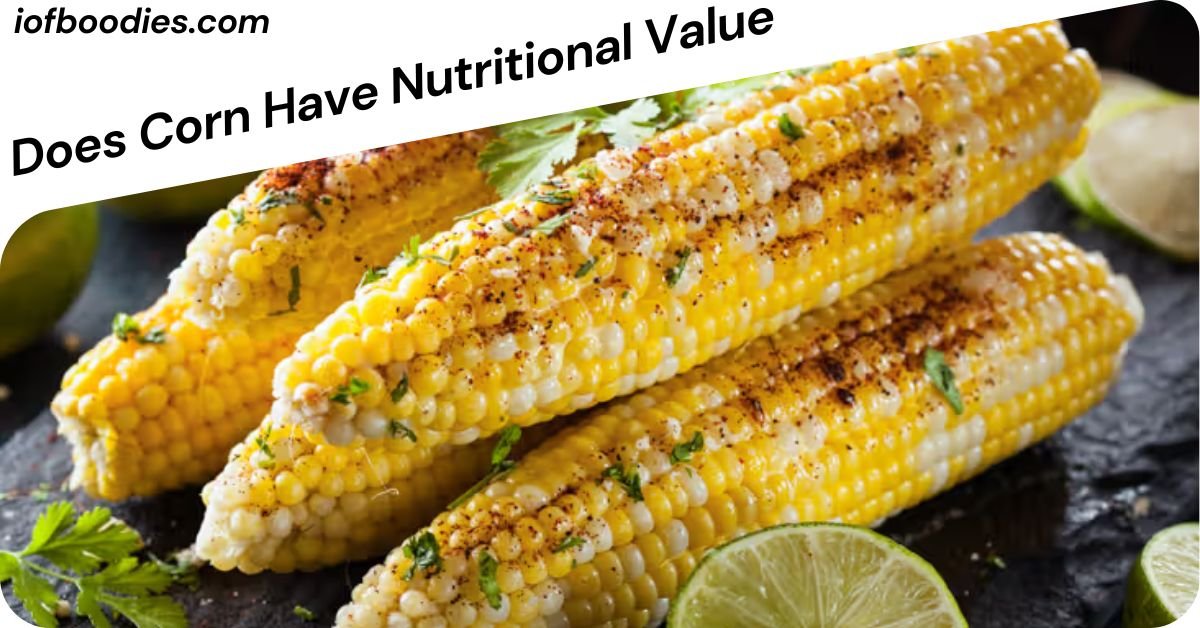
Does Corn Have Nutritional Value? A Complete Guide to Corn Nutrition, Health Benefits, and Facts
Many people enjoy corn in different forms, including corn on the cob, popcorn, corn tortillas, cornmeal, and canned corn. It is one of the most widely consumed grains in the United States and around the world. Yet many people still ask an important question: does corn have nutritional value?
Some believe corn is nothing more than a starchy vegetable with little nutritional benefit. Others consider it a healthy food packed with vitamins, minerals, fiber, and antioxidants. The truth lies somewhere in the middle.
So, does corn have nutritional value? Yes, it absolutely does. Corn provides important nutrients that support overall health. It contains carbohydrates for energy, dietary fiber for digestion, vitamins that help body functions, minerals that support bones and muscles, and antioxidants that may protect eye health.
In this comprehensive guide, we will explore everything you need to know about corn nutrition. We will answer questions such as:
- Does corn have any nutritional value?
- What nutritional value does corn have?
- Does corn have a nutritional value compared to other vegetables?
- Does corn on the cob have any nutritional value?
- Is corn healthy for weight management?
- What are the benefits and drawbacks of eating corn?
By the end of this article, you will have a complete understanding of corn’s nutritional profile and how it fits into a healthy diet.
Does Corn Have Nutritional Value?
The simple answer is yes.
Corn contains a variety of nutrients that contribute to good health. While it is higher in carbohydrates than many vegetables, it also provides fiber, vitamins, minerals, and plant compounds that offer health benefits.
A medium ear of sweet corn contains nutrients such as:
- Calories: About 90 to 100
- Carbohydrates: Around 21 grams
- Fiber: About 2 to 3 grams
- Protein: Around 3 grams
- Fat: About 1.5 grams
- Vitamin C
- Thiamin (Vitamin B1)
- Folate
- Magnesium
- Potassium
- Phosphorus
- Antioxidants
This nutritional combination makes corn more than just a source of starch. It can contribute to daily nutrient intake while providing energy and satisfaction.

What Nutritional Value Does Corn Have?
People often ask, what nutritional value does corn have that makes it worth eating?
Corn provides several important nutrients that support different functions in the body.
Carbohydrates for Energy
Corn is naturally rich in carbohydrates. Carbohydrates serve as the body’s main source of fuel.
The carbohydrates found in corn help:
- Provide energy for daily activities
- Support brain function
- Fuel exercise and physical activity
- Maintain normal body functions
Unlike refined sugars, corn contains fiber and other nutrients that make it a more nutritious carbohydrate source.
Dietary Fiber for Digestive Health
Fiber is one of the most valuable nutrients in corn.
Fiber may help:
- Improve digestion
- Support regular bowel movements
- Increase feelings of fullness
- Promote healthy gut bacteria
- Support heart health
Many Americans do not consume enough fiber, making corn a useful addition to a balanced diet.
Protein Content
Although corn is not considered a high-protein food, it still provides small amounts of plant-based protein.
Protein helps:
- Build muscle tissue
- Repair body cells
- Support immune function
- Produce enzymes and hormones
Combining corn with beans or other protein-rich foods creates a more complete protein profile.
Also Read: What Is Nutritional Yeast? The Complete Guide to Benefits, Uses, Nutrition, and More
Essential Vitamins
Corn contains several vitamins that play important roles in overall health.
These include:
Vitamin B1 (Thiamin)
Thiamin helps convert food into energy and supports the nervous system.
Folate
Folate is important for cell growth and DNA production. It is especially important during pregnancy.
Vitamin C
Vitamin C supports:
- Immune health
- Skin health
- Wound healing
- Antioxidant protection
Vitamin B6
Vitamin B6 contributes to brain development and immune function.
Important Minerals
Corn also provides valuable minerals.
Magnesium
Magnesium supports:
- Muscle function
- Nerve function
- Bone health
- Blood sugar regulation
Potassium
Potassium helps maintain healthy blood pressure and proper muscle function.
Phosphorus
Phosphorus supports strong bones and teeth.
Zinc
Zinc contributes to immune system health and wound healing.
Does Corn Have Any Nutritional Value Compared to Other Vegetables?
A common criticism of corn is that it is less nutritious than vegetables like broccoli, spinach, or kale.
While leafy greens contain more vitamins per calorie, this comparison can be misleading.
Different vegetables provide different benefits.
For example:
- Broccoli offers high levels of vitamin C and vitamin K.
- Spinach provides iron and folate.
- Sweet potatoes supply vitamin A.
- Corn provides energy, fiber, antioxidants, and B vitamins.
Instead of viewing vegetables as competitors, it is better to think of them as complementary foods. Each contributes unique nutrients.
So, does corn have any nutritional value when compared with other vegetables?
Absolutely. It offers its own nutritional advantages and can be part of a healthy eating pattern.
Does Corn Have a Nutritional Value as a Whole Grain?
Whole-grain corn products provide even more nutritional benefits.
Examples include:
- Popcorn
- Whole cornmeal
- Stone-ground corn
- Whole-grain corn tortillas
Whole grains retain the bran, germ, and endosperm. This means more nutrients remain intact.
Research consistently shows that whole grains may support:
- Heart health
- Digestive health
- Weight management
- Blood sugar control
When consumed in minimally processed forms, corn can be an excellent whole-grain choice.
Does Corn on the Cob Have Any Nutritional Value?
Many people specifically wonder, does corn on the cob have any nutritional value?
The answer is yes.
Corn on the cob is actually one of the healthiest ways to eat corn because it is usually consumed in a minimally processed state.
Corn on the cob provides:
- Fiber
- Vitamin C
- Folate
- Magnesium
- Potassium
- Antioxidants
When grilled, boiled, or steamed without excessive butter or salt, corn on the cob can be a nutritious side dish.
One advantage of corn on the cob is that it encourages slower eating, which may increase satisfaction and help with portion control.
The Antioxidants Found in Corn
One of the most overlooked benefits of corn is its antioxidant content.
Corn contains antioxidants such as:
- Lutein
- Zeaxanthin
- Ferulic acid
- Beta-carotene (especially yellow corn)
These compounds help protect cells from oxidative stress.
Benefits for Eye Health
Lutein and zeaxanthin are especially important for eye health.
These antioxidants accumulate in the retina and may help protect against age-related vision problems.
Yellow corn is one of the natural food sources of these valuable compounds.
Is Corn Good for Weight Management?
Many people avoid corn because they believe it causes weight gain.
The reality is more complex.
Corn itself is not inherently fattening.
Weight gain occurs when total calorie intake consistently exceeds calorie needs.
Corn may actually support weight management because it contains:
- Fiber
- Water
- Complex carbohydrates
These nutrients can increase fullness and reduce hunger.
The issue often comes from how corn is prepared.
For example:
- Corn chips
- Corn covered in butter
- Sugary corn products
These versions contain additional calories and may contribute to weight gain when consumed frequently.
Whole corn is a different story and can fit into a healthy weight management plan.
Is Corn Healthy for Heart Health?
Corn may support heart health in several ways.
Fiber Supports Healthy Cholesterol Levels
Dietary fiber can help maintain healthy cholesterol levels.
Potassium Supports Blood Pressure
Potassium helps balance sodium levels and supports healthy blood pressure.
Antioxidants Protect Cells
The antioxidants in corn may help reduce oxidative stress, which is associated with heart disease.
When consumed as part of a balanced diet rich in fruits, vegetables, legumes, and whole grains, corn can contribute to cardiovascular wellness.
Corn and Blood Sugar: What You Should Know
Because corn contains carbohydrates, some people worry about blood sugar spikes.
The impact depends on:
- Portion size
- Preparation method
- What foods are eaten alongside it
Whole corn contains fiber, which slows digestion.
Pairing corn with:
- Lean protein
- Healthy fats
- Non-starchy vegetables
can help support balanced blood sugar responses.
Individuals with diabetes can often enjoy corn in moderation as part of a personalized meal plan.
Fresh Corn vs Canned Corn
Both fresh and canned corn contain nutrients.
However, there are differences.
Fresh Corn
Advantages include:
- Natural flavor
- Lower sodium
- Minimal processing
Canned Corn
Advantages include:
- Convenience
- Long shelf life
- Year-round availability
Choose low-sodium canned varieties when possible.
Rinsing canned corn can further reduce sodium content.
Fresh Corn vs Frozen Corn
Frozen corn is often surprisingly nutritious.
Because it is typically frozen soon after harvest, many nutrients are preserved.
In some cases, frozen corn may contain nutrient levels similar to fresh corn.
This makes frozen corn a convenient and healthy option.
Is Popcorn Nutritious?
Many people are surprised to learn that popcorn is a whole grain.
Air-popped popcorn provides:
- Fiber
- Antioxidants
- Whole-grain benefits
Popcorn can be a healthy snack when prepared without excessive:
- Butter
- Oil
- Sugar
- Salt
Air-popped popcorn is one of the most nutrient-dense snack options available.
Corn Myths That Need to Be Corrected
Myth 1: Corn Has No Nutritional Value
This is false.
Corn contains vitamins, minerals, fiber, antioxidants, and plant compounds that support health.
Myth 2: Corn Is Just Sugar
Corn contains carbohydrates, but it is not simply sugar.
Whole corn contains fiber and nutrients that make it much more nutritious than refined sugary foods.
Also Read: What Is Nutrition? A Complete Guide to Understanding Nutrition, Health, and Healthy Living
Myth 3: Corn Is Unhealthy
Corn can absolutely be part of a healthy diet.
The key is choosing minimally processed forms and consuming appropriate portions.
Myth 4: Corn Causes Weight Gain
No single food causes weight gain by itself.
Overall dietary habits matter far more than one individual food.
The Nutritional Value of Different Types of Corn
Sweet Corn
The most common type eaten as a vegetable.
Yellow Corn
Rich in carotenoid antioxidants.
White Corn
Similar nutritional profile but contains fewer yellow pigments.
Blue Corn
Contains unique antioxidants called anthocyanins.
Popcorn
A whole-grain variety with high fiber content.
Each type offers nutritional benefits.
Best Ways to Include Corn in a Healthy Diet
Healthy ways to enjoy corn include:
- Grilled corn on the cob
- Steamed sweet corn
- Corn and bean salad
- Vegetable soup with corn
- Whole-grain corn tortillas
- Air-popped popcorn
- Corn mixed with vegetables
Combining corn with protein and vegetables creates balanced meals.
Expert Perspective: Why Corn Deserves More Respect
Corn often receives unfair criticism because it is classified as a starchy vegetable.
However, this perspective overlooks its nutritional strengths.
Corn provides:
- Energy
- Fiber
- Antioxidants
- Vitamins
- Minerals
A food does not need to be low in carbohydrates to be nutritious.
In fact, many traditional healthy diets around the world have included corn for generations.
Rather than asking whether corn is healthy or unhealthy, a better question is how corn fits into an overall balanced eating pattern.
When viewed in this context, corn can be a valuable and nutritious food choice.
Also Read: How to Read Nutrition Labels: The Complete Beginner’s Guide to Making Healthier Food Choices
Conclusion
So, does corn have nutritional value?
Without question, yes.
Corn contains carbohydrates for energy, dietary fiber for digestion, vitamins for essential body functions, minerals for overall health, and antioxidants that may support eye and heart health.
Whether you are asking does corn have any nutritional value, what nutritional value does corn have, does corn have a nutritional value, or does corn on the cob have any nutritional value, the answer remains the same: corn offers meaningful nutrition and can be part of a healthy diet.
The healthiest approach is to choose minimally processed corn products such as fresh corn, frozen corn, corn on the cob, and air-popped popcorn while balancing them with other nutrient-rich foods.
When eaten as part of a varied and balanced diet, corn provides far more than many people realize.
Frequently Asked Questions
Is corn considered a vegetable or a grain?
Corn can be classified as both. Fresh sweet corn is often treated as a vegetable, while dried corn products such as cornmeal and popcorn are considered grains.
Can you eat corn every day?
Most healthy adults can enjoy corn daily as part of a balanced diet that includes a variety of fruits, vegetables, proteins, and whole grains.
Does corn contain gluten?
No. Corn is naturally gluten-free, making it suitable for people with celiac disease or gluten sensitivity.
Is yellow corn healthier than white corn?
Both are nutritious. Yellow corn contains more carotenoid antioxidants such as lutein and zeaxanthin, which support eye health.
Does cooking corn reduce its nutritional value?
Some nutrients may decrease slightly during cooking, but many remain intact. Cooking can also improve digestibility.
Is frozen corn as healthy as fresh corn?
Yes. Frozen corn is often harvested and frozen quickly, helping preserve nutrients.
Can children benefit from eating corn?
Yes. Corn provides energy, fiber, vitamins, and minerals that support growth and development.
Does organic corn have more nutritional value?
Current research suggests that nutritional differences between organic and conventional corn are generally small. Both can be healthy choices.
Why do athletes eat corn?
Corn provides carbohydrates that help fuel physical activity and replenish energy stores after exercise.
Is corn a good food for older adults?
Yes. Corn provides fiber, antioxidants, and nutrients that may support digestive health, vision health, and overall wellness as people age.