Correct Synonyms: 30+ Useful Words (2026 Guide)
Synonyms of correct are useful when you want to make your writing more natural, precise, and interesting. Although “correct” is a common English word, using it repeatedly can make your sentences sound simple or repetitive.
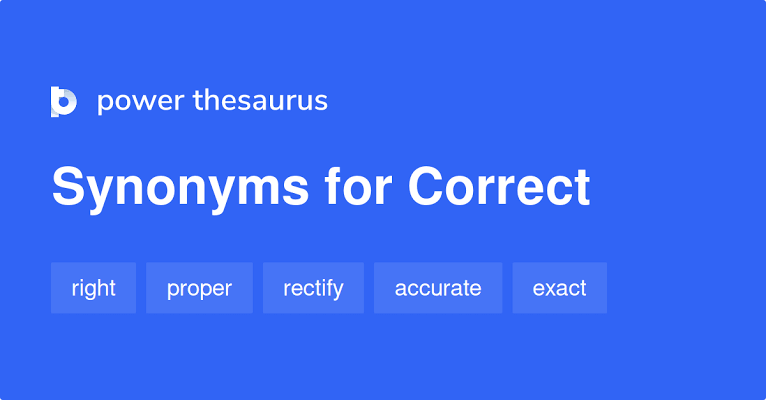
Depending on the situation, you can replace correct with words such as right, accurate, proper, true, exact, valid, precise, appropriate, sound, or legitimate.
However, these words do not all mean exactly the same thing. For example, “accurate” is usually better for facts and information, while “proper” often describes the right method or behavior. “Valid” can describe a logical argument, and “right” is one of the most natural choices in everyday conversation.
This guide explains the most useful synonyms of correct, their meanings, pronunciation, examples, differences, and the situations where each word works best.
What Does “Correct” Mean?
“Correct” generally means right, accurate, true, or free from mistakes.
It can also mean to fix something that is wrong.
“Correct” can be used as both an adjective and a verb.
Correct as an Adjective
As an adjective, correct describes something that is right or contains no error.
Examples:
- Your answer is correct.
- That is the correct spelling.
- We have the correct information.
- She chose the correct option.
In these examples, “correct” means right, accurate, or free from mistakes.
Correct as a Verb
As a verb, correct means to find and fix an error or problem.
Examples:
- Please correct the mistake.
- The teacher corrected my answer.
- I need to correct this sentence.
- The editor corrected several errors.
Here, “correct” means to fix, amend, revise, or change something that is wrong.
Correct Synonym
A correct synonym is a word that has the same or a closely related meaning as “correct.”
The most useful choices include:
- right
- accurate
- proper
- true
- exact
- valid
- precise
- appropriate
- suitable
- sound
- legitimate
- factual
- verified
- justified
- flawless
The best synonym depends on the sentence.
For example:
Your answer is correct.
You can say:
Your answer is right.
But if you are talking about data, this is more natural:
The data is accurate.
If you are talking about a procedure, you might say:
Follow the proper procedure.
This is why choosing a synonym based only on a dictionary definition is not always enough.
Synonyms of Correct
Here are 30+ useful synonyms and related alternatives for correct, with simple meanings and examples.
1. Right
“Right” is probably the most common everyday synonym for correct.
It means something is true, accurate, or not wrong.
Also read:Uplifting Synonym: 30+ Positive Words, Meaning, Examples, and Antonyms
Examples:
- Your answer is right.
- You made the right choice.
Use “right” in casual conversation, schoolwork, and everyday communication.
2. Accurate
“Accurate” means correct and free from factual or measurement errors.
Examples:
- The report contains accurate information.
- Please provide accurate details.
“Accurate” is especially useful when discussing facts, statistics, measurements, reports, and data.
3. Proper
“Proper” means suitable, appropriate, or correct according to an accepted method or standard.
Examples:
- Use the proper grammar.
- Follow the proper procedure.
“Proper” is often used for behavior, methods, procedures, clothing, grammar, and formal situations.
4. True
“True” means based on facts or reality.
Examples:
- The statement is true.
- Is this story true?
“True” is a good synonym for correct when you are talking about facts or statements.
5. Exact
“Exact” means completely accurate or matching something precisely.
Examples:
- Tell me the exact number.
- What is the exact time?
“Exact” is particularly useful when precision matters.
6. Valid
“Valid” means logically sound, acceptable, legally recognized, or supported by good reasoning.
Examples:
- That is a valid argument.
- Your concern is valid.
“Valid” is common in academic, legal, technical, and professional writing.
7. Precise
“Precise” means very accurate and specific.
Examples:
- We need precise measurements.
- Please give precise instructions.
“Precise” is stronger than simply saying something is correct when the focus is on exact detail.
8. Appropriate
“Appropriate” means suitable or right for a particular situation.
Examples:
- That was an appropriate response.
- Wear appropriate clothing for the event.
Something can be appropriate without necessarily being factually correct, so this synonym should be used carefully.
9. Suitable
“Suitable” means right or appropriate for a particular purpose.
Examples:
- This is a suitable method.
- We need a suitable location.
It works well when discussing choices, methods, places, tools, or conditions.
10. Sound
“Sound” can mean reasonable, reliable, or logically correct.
Examples:
- She made a sound decision.
- That is sound advice.
It is especially useful when describing decisions, reasoning, arguments, and advice.
11. Legitimate
“Legitimate” means lawful, genuine, valid, or acceptable.
Examples:
- He has a legitimate reason.
- The company made a legitimate claim.
This word is common in legal, business, and formal contexts.
12. Factual
“Factual” means based on facts rather than opinions or imagination.
Examples:
- The article provides factual information.
- Make sure your report is factual.
It is useful when discussing information, reports, articles, and statements.
13. Faultless
“Faultless” means without mistakes, defects, or faults.
Examples:
- Her performance was faultless.
- The document was nearly faultless.
It is stronger than “correct” because it suggests there are no noticeable faults.
14. Flawless
“Flawless” means completely free from errors or imperfections.
Examples:
- He gave a flawless performance.
- Her work was flawless.
“Flawless” can be used for work, performances, execution, appearance, and results.
15. Perfect
“Perfect” can mean completely correct or without mistakes.
Examples:
- You got a perfect score.
- That is a perfect answer.
However, “perfect” is often stronger than “correct.” Something can be correct without being perfect.
16. Justified
“Justified” means supported by a good reason, evidence, or explanation.
Examples:
- His decision was justified.
- The criticism was justified.
This word works especially well for decisions, actions, opinions, and arguments.
17. Verified
“Verified” means checked and confirmed as accurate or genuine.
Examples:
- The information has been verified.
- We used verified data.
“Verified” is useful in journalism, research, business, technology, and online communication.
18. Confirmed
“Confirmed” means established as true or accurate after checking.
Examples:
- The appointment has been confirmed.
- The information was confirmed by the company.
“Confirmed” often emphasizes that someone has checked or approved something.
19. Legit
“Legit” is an informal form of legitimate.
It can mean genuine, real, valid, or acceptable.
Examples:
- Is this website legit?
- That is a legit concern.
Use “legit” mainly in casual speech and informal writing.
20. Fair
“Fair” can sometimes relate to correct treatment or decisions according to rules or standards.
Examples:
- The judge made a fair decision.
- That seems like a fair result.
“Fair” is not a direct synonym for factual correctness, so it should mainly be used when justice or equal treatment is involved.
21. Reliable
“Reliable” means dependable and likely to provide accurate results or information.
Examples:
- Use a reliable source.
- We need reliable information.
Something reliable is not necessarily always correct, but reliability often supports accuracy.
22. Exacting
“Exacting” means requiring very high standards of accuracy or detail.
Examples:
- The job requires exacting standards.
- The researcher used an exacting process.
It is more commonly used to describe standards, requirements, or people than simple answers.
23. Unerring
“Unerring” means making no mistakes.
Examples:
- She has an unerring sense of direction.
- His judgment was unerring.
This is a more advanced and formal word.
24. Definitive
“Definitive” means final, authoritative, or providing a clear answer.
Examples:
- The study provides a definitive answer.
- We need definitive evidence.
It can suggest a stronger level of certainty than “correct.”
25. Conclusive
“Conclusive” means providing enough evidence to settle an issue.
Examples:
- The evidence was conclusive.
- There is no conclusive proof yet.
Use this word when evidence or results establish something clearly.
26. Authentic
“Authentic” means genuine or real.
Examples:
- The document is authentic.
- We verified that the signature was authentic.
“Authentic” is related to correctness in some contexts but is more specifically about genuineness.
27. Lawful
“Lawful” means permitted or recognized by law.
Examples:
- The action was lawful.
- They followed a lawful procedure.
It is a useful alternative when “correct” means legally acceptable.
28. Ethical
“Ethical” means morally acceptable according to principles of right and wrong.
Examples:
- The company followed an ethical policy.
- We need to make an ethical decision.
“Ethical” is appropriate when correctness relates to morality rather than factual accuracy.
29. Just
“Just” can mean morally right, fair, or based on justice.
Examples:
- The decision was just.
- They wanted a just solution.
It is useful when correct means morally or socially fair.
30. Apt
“Apt” means appropriate, suitable, or well chosen.
Examples:
- That is an apt description.
- She made an apt comparison.
It is a more sophisticated alternative when something is especially suitable.
31. Reasonable
“Reasonable” means sensible, logical, or fair.
Examples:
- That is a reasonable conclusion.
- She made a reasonable decision.
It can sometimes replace correct when you are talking about an opinion, conclusion, or decision.
32. Legitimate
“Legitimate” can also mean valid or properly recognized.
Examples:
- That is a legitimate concern.
- The claim is legitimate.
It is especially common in formal, legal, and professional contexts.
Synonyms for Correct as a Verb
When correct means “to fix something,” different words become more useful.
Fix
“Fix” is the most common informal synonym for correct.
Please fix the mistake.
Amend
“Amend” means to change something in order to improve or correct it.
The company amended the agreement.
Revise
“Revise” means to review and make changes.
Please revise your essay.
Edit
“Edit” means to change written material to improve or correct it.
I need to edit the document.
Rectify
“Rectify” is a formal word meaning to correct a problem or error.
The company acted quickly to rectify the mistake.
Adjust
“Adjust” means to make a small change so that something becomes correct or works properly.
Adjust the settings before using the device.
Repair
“Repair” usually means to fix something damaged or broken.
The technician repaired the machine.
It is not always interchangeable with correct, but it works when the problem involves damage or malfunction.
Remedy
“Remedy” means to correct or solve a problem.
The new policy was designed to remedy the issue.
Synonyms for Correctly
“Correctly” is the adverb form of correct. It means in a right, accurate, or proper way.
Useful synonyms include:
- accurately
- properly
- rightly
- precisely
- exactly
- appropriately
- suitably
- successfully
- effectively
Examples:
She answered the question correctly.
She answered the question accurately.
She completed the task properly.
The best synonym depends on what you want to emphasize.
Synonyms for Correcting
“Correcting” can mean fixing an error, improving something, or changing something that is wrong.
Useful synonyms include:
- fixing
- revising
- editing
- amending
- adjusting
- repairing
- rectifying
- remedying
- improving
- modifying
For example:
The teacher is correcting the papers.
You could say:
The teacher is reviewing and marking the papers.
But if the focus is specifically on changing mistakes:
The teacher is fixing the errors.
Synonyms for Correction
“Correction” refers to the act of fixing an error or the change made to correct something.
Possible synonyms include:
- amendment
- revision
- adjustment
- edit
- modification
- rectification
- repair
- remedy
- improvement
Examples:
The editor made several corrections.
The editor made several revisions.
The company issued an amendment.
The appropriate word depends on what kind of correction is being made.
Synonyms for Correctness
“Correctness” means the quality or state of being correct.
Common alternatives include:
- accuracy
- precision
- validity
- truth
- exactness
- reliability
- soundness
- factual accuracy
- validity
Examples:
We checked the correctness of the information.
A more natural version may be:
We checked the accuracy of the information.
“Accuracy” is especially common when discussing data, facts, measurements, and information.
Another Word for Correct
If you simply need another word for “correct,” these are the strongest everyday choices:
| Meaning | Another word for correct |
| Not wrong | Right |
| Free from factual errors | Accurate |
| Suitable | Appropriate |
| According to rules | Proper |
| Completely precise | Exact |
| Very specific | Precise |
| Logically acceptable | Valid |
| Based on facts | True |
| Reasonable | Sound |
| Legally acceptable | Legitimate |
The safest general replacement is “right.”
However, “accurate” is usually better when discussing facts or information.
Correct Synonym for Different Situations
The best synonym changes with context.
Correct Answer
Use:
- right
- accurate
- valid
Example:
You chose the right answer.
Correct Information
Use:
- accurate
- factual
- verified
- reliable
Example:
Please provide accurate information.
Correct Method
Use:
- proper
- appropriate
- suitable
- recommended
Example:
Follow the proper method.
Correct Decision
Use:
- right
- sound
- wise
- reasonable
- justified
Example:
She made the right decision.
Correct Behavior
Use:
- appropriate
- proper
- acceptable
- ethical
- respectful
Example:
His behavior was appropriate.
Correct Measurement
Use:
- accurate
- precise
- exact
Example:
We need precise measurements.
Also read:Expansive Synonym: Meaning, Definition, Examples, Synonyms, and Antonyms
Correct Argument
Use:
- valid
- sound
- logical
- justified
Example:
She presented a valid argument.
Correct Information
Use:
- accurate
- factual
- verified
- reliable
Example:
The website provides verified information.
Correct vs. Right
“Correct” and “right” are often interchangeable.
Compare:
Your answer is correct.
Your answer is right.
Both are natural.
However, “right” has several meanings that “correct” does not.
For example:
- Turn right at the next street.
- Everyone has the right to speak.
- Do the right thing.
Because “right” has many meanings, “correct” can sometimes be more precise.
In everyday conversation, however, “right” is often more natural.
Correct vs. Accurate
“Correct” means free from error or wrongness.
“Accurate” emphasizes factual precision.
Compare:
Your answer is correct.
This means the answer is right.
The measurement is accurate.
This means the measurement closely represents the actual value.
The two words overlap, but “accurate” is especially useful for data, measurements, facts, and reports.
Correct vs. Proper
“Correct” can mean factually right.
“Proper” usually means suitable or according to the accepted method.
Compare:
The answer is correct.
Use the proper method.
You would not normally replace “correct” with “proper” in every situation.
Correct vs. Exact
“Exact” emphasizes complete precision.
Give me the exact amount.
“Correct” simply means that the amount is not wrong.
For example, an answer can be correct even if it is rounded. An exact answer normally requires greater precision.
Correct vs. Valid
“Valid” is commonly used for arguments, reasons, claims, documents, tickets, and legal matters.
Examples:
That is a valid argument.
Your ticket is valid.
“Correct” is broader and works in many more everyday situations.
Formal Synonyms of Correct
If you are writing a professional email, academic paper, business report, or formal document, consider these alternatives:
- accurate
- precise
- valid
- appropriate
- proper
- factual
- verified
- confirmed
- justified
- legitimate
- sound
- exact
For example:
Informal:
Please fix the mistake.
Formal:
Please rectify the error.
Informal:
Is this information correct?
Formal:
Is this information accurate?
Informal Synonyms of Correct
In casual conversations, these expressions can sound natural:
- right
- spot-on
- on point
- legit
- exactly
- absolutely right
- dead-on
- you got it
- that’s right
Examples:
You’re right.
That’s exactly right.
Your guess was spot-on.
These expressions are generally better for conversation than formal writing.
Fancy Words for Correct
If you want a more advanced word, consider:
- precise
- impeccable
- unerring
- definitive
- conclusive
- irrefutable
- substantiated
- validated
- incontrovertible
But do not choose a complicated word simply because it sounds impressive.
For example, “irrefutable” means impossible or extremely difficult to disprove. It is much stronger than “correct.”
Synonyms for Grammatically Correct
If you are describing language that follows grammar rules, you can use:
- grammatically sound
- grammatically accurate
- properly constructed
- well-formed
- linguistically accurate
Examples:
This sentence is grammatically correct.
This sentence is grammatically sound.
The first is simpler and more common. The second sounds more formal.
Synonyms for Politically Correct
“Politically correct” can describe language or behavior intended to avoid discrimination, exclusion, or unnecessary offense.
Depending on context, alternatives include:
- inclusive
- respectful
- sensitive
- considerate
- non-discriminatory
- socially appropriate
Example:
The company uses inclusive language.
This can be more specific and positive than simply saying “politically correct.”
Synonyms for Morally Correct
When “correct” means morally right, use words such as:
- ethical
- moral
- just
- righteous
- principled
- honorable
- virtuous
- fair
Example:
It was the morally correct decision.
A natural alternative is:
It was the ethical decision.
Synonyms for “That’s Correct”
If someone confirms something, they can say:
- That’s right.
- Exactly.
- Absolutely.
- Yes, that’s right.
- You’re right.
- That is accurate.
- That is true.
- Precisely.
- You got it right.
For casual conversation, “That’s right” is probably the most natural choice.
Synonyms for “You Are Correct”
You can say:
- You are right.
- You’re absolutely right.
- That’s right.
- Exactly.
- Your understanding is accurate.
- Your answer is right.
- That is true.
- You have it right.
In professional communication, “Your understanding is accurate” can sound more neutral than “You’re absolutely right.”
Synonyms for “Correct Me If I’m Wrong”
This expression asks someone to point out an error if your understanding is not accurate.
Alternatives include:
- Please let me know if I’m mistaken.
- Please correct me if I’m mistaken.
- Let me know if I have this wrong.
- Please tell me if I misunderstood.
- Let me know if my understanding is incorrect.
- Please clarify if I have misunderstood.
For professional communication, “Please let me know if I have misunderstood” is a polite option.
Also read:Synonym for Force: Meaning, Alternatives, and Examples
Synonyms for “If I Recall Correctly”
This phrase means “if my memory is accurate.”
Alternative expressions include:
- If I remember correctly
- If I remember right
- If my memory serves me
- As far as I remember
- To the best of my recollection
- As I recall
Example:
If I recall correctly, the meeting begins at 10 a.m.
A simpler version is:
If I remember correctly, the meeting begins at 10 a.m.
Synonyms for “If I Understand Correctly”
This expression is useful when you want to confirm your understanding.
You can say:
- If I understand you correctly
- If I have understood you correctly
- If I have this right
- If I understand this correctly
- If my understanding is correct
- If I understood you correctly
Example:
If I understand you correctly, you want us to update the report.
This is especially useful in workplace conversations because it helps prevent misunderstandings.
Synonyms for “I Stand Corrected”
“I stand corrected” means that you accept that your previous statement was wrong.
Other ways to say it include:
- I was mistaken.
- You’re right.
- I was wrong about that.
- I had that wrong.
- Thanks for correcting me.
- I appreciate the correction.
- I need to correct myself.
“I stand corrected” is a concise and somewhat formal expression.
Correct Synonyms by Tone
The same basic idea can sound different depending on the word you choose.
| Tone | Useful words |
| Everyday | right, correct, true |
| Formal | accurate, valid, precise |
| Professional | verified, confirmed, appropriate |
| Academic | accurate, valid, precise, sound |
| Legal | lawful, valid, legitimate |
| Moral | ethical, just, right |
| Informal | spot-on, legit, on point |
| Strong | flawless, faultless, impeccable |
Tone is important because a word that works well in conversation may sound unusual in an academic paper.
Real-Life Examples
At School
Your answer is correct.
More casually:
Your answer is right.
At Work
The information in the report is accurate.
In an Email
Please let me know if the information is correct.
A more formal option:
Please confirm that the information is accurate.
In a Technical Setting
We need precise measurements before proceeding.
In a Legal Setting
The document is legally valid.
In a Conversation
You’re right. I misunderstood the situation.
In Writing
Please use the proper format for the report.
In Research
The researchers used verified data.
Common Mistakes When Using Synonyms of Correct
Not every synonym works in every sentence.
Mistake 1: Using “Accurate” for Everything
“Accurate” works well for facts, measurements, and information.
But it may sound strange when discussing morality.
Instead of:
It was an accurate decision.
say:
It was the right decision.
Mistake 2: Using “Proper” for Facts
Instead of:
The information is proper.
say:
The information is accurate.
“Proper” is usually about suitability or accepted procedure.
Mistake 3: Using “Exact” as a General Replacement
“Exact” focuses on precision.
What is the exact number?
This does not mean that “exact” should replace “correct” everywhere.
Mistake 4: Using “Valid” for Simple Answers
“Valid” has more specific meanings related to logic, acceptance, or legality.
For a basic school answer, “right” or “correct” is usually more natural.
Mistake 5: Using Informal Words in Formal Writing
Words such as “legit,” “spot-on,” and “on point” can work in casual conversation but may sound inappropriate in academic or professional writing.
How to Choose the Best Correct Synonym
Choosing a synonym becomes easy when you identify what “correct” means in your sentence.
If you mean “not wrong,” use:
right
If you mean “factually accurate,” use:
accurate
If you mean “suitable,” use:
appropriate
If you mean “according to an accepted method,” use:
proper
If you mean “completely precise,” use:
exact
If you mean “very accurate,” use:
precise
If you mean “logically acceptable,” use:
valid
If you mean “morally right,” use:
ethical, just, or moral
If you mean “fix an error,” use:
fix, amend, revise, or rectify
This simple approach will help you choose a natural synonym instead of replacing words randomly.
Correct Synonyms and Antonyms
Knowing the opposite of correct can also help you understand its meaning.
Synonyms
- right
- accurate
- proper
- true
- exact
- valid
- precise
- appropriate
- suitable
- sound
- factual
- verified
Antonyms
- wrong
- incorrect
- inaccurate
- false
- improper
- invalid
- mistaken
- erroneous
- unsuitable
- inappropriate
- flawed
- faulty
The correct antonym also depends on context.
For example:
correct information → inaccurate information
correct answer → wrong answer
correct procedure → improper procedure
correct argument → invalid argument
Quick Comparison of the Best Synonyms
| Word | Best used for | Example |
| Right | Everyday answers and choices | You are right. |
| Accurate | Facts and information | The report is accurate. |
| Proper | Methods and procedures | Use the proper method. |
| True | Facts and statements | The statement is true. |
| Exact | Specific details | Give the exact amount. |
| Precise | Detailed accuracy | Use precise measurements. |
| Valid | Arguments and claims | That is a valid argument. |
| Appropriate | Situations and behavior | That response is appropriate. |
| Sound | Decisions and reasoning | That was a sound decision. |
| Verified | Checked information | The data is verified. |
| Legitimate | Lawful or acceptable matters | It is a legitimate claim. |
| Ethical | Moral decisions | It was an ethical choice. |
Final Tips for Using Synonyms of Correct
When choosing another word for correct, always think about context first.
A good synonym should fit both the meaning and the tone of your sentence.
For everyday speech, “right” is usually the easiest choice.
For facts and information, “accurate” is often better.
For methods and procedures, “proper” or “appropriate” works well.
For precise numbers or details, choose “exact” or “precise.”
For arguments and reasoning, “valid” or “sound” may be more appropriate.
For moral questions, use “right,” “ethical,” or “just.”
And when correct is being used as a verb, words such as “fix,” “revise,” “amend,” and “rectify” can help you avoid repetition.
FAQs About Synonyms of Correct
What is the most common synonym for correct?
The most common synonym for “correct” is “right.” It is especially natural in everyday conversation, such as “You are right” or “That is the right answer.”
What is the best synonym for correct in formal writing?
“Accurate” is often a strong choice in formal writing when discussing facts or information. Other options include “precise,” “valid,” “appropriate,” “verified,” and “sound,” depending on the context.
What is another word for correct when it means to fix?
When “correct” is a verb meaning to fix an error, you can use “fix,” “amend,” “revise,” “edit,” “adjust,” “repair,” or “rectify.” “Fix” is the most common everyday option.
What is a synonym for correctness?
Common synonyms and related words for “correctness” include “accuracy,” “precision,” “validity,” “exactness,” “truth,” and “soundness.” “Accuracy” is particularly common when discussing information or data.
What is the difference between correct, right, and accurate?
“Correct” is a broad word meaning free from error. “Right” is a common everyday alternative and can also refer to morality or direction. “Accurate” focuses more specifically on factual precision and reliable details.
Conclusion
Learning synonyms of correct can make your English more natural, flexible, and precise. While “right” is the simplest everyday alternative, words such as “accurate,” “proper,” “exact,” “precise,” “valid,” and “appropriate” are better in specific situations.
The key is to choose the word according to the meaning you want to express. Use “accurate” for facts, “proper” for accepted methods, “exact” for precise details, “valid” for logical claims, and “right” for everyday situations.
When you understand these small differences, you can avoid unnecessary repetition and choose vocabulary that fits your sentence, audience, and purpose.