🏗️ Synonyms for Implemented: 30+ Powerful Alternatives, Meanings, and Examples
Synonyms for implemented are useful when you want to explain that a plan, policy, system, idea, or strategy was put into action. The word “implemented” is common in business, education, technology, government, project management, and professional writing.
For example, you can say, “The company implemented a new policy.” This is correct, but sometimes another word can make your sentence more specific.
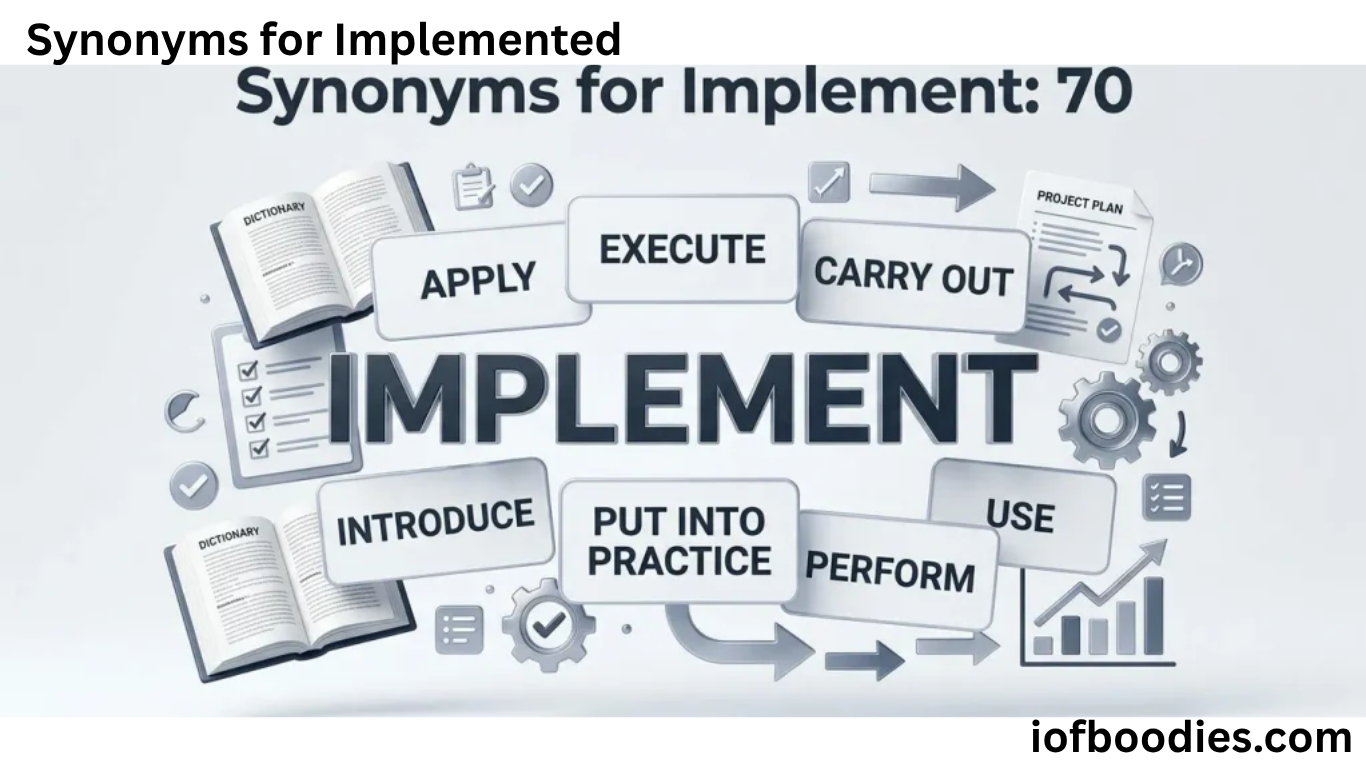
You might say “introduced,” “executed,” “deployed,” “established,” “applied,” or “carried out,” depending on what actually happened.
Learning different synonyms for implemented can help you avoid repetition and choose words that fit your exact meaning. This is especially useful when writing a resume, essay, report, business document, or professional email.
The important point is that not every synonym means exactly the same thing. “Implemented,” “executed,” “adopted,” and “enforced” can be related, but each word has its own use.
📚 What Does “Implemented” Mean?
“Implemented” is the past tense and past participle of the verb “implement.”
In simple English, implemented means put into action or started being used.
For example:
“The company implemented a new training program.”
This means the company did not only discuss the program. It actually started using it.
Another example is:
“The school implemented a new attendance policy.”
This means the school put the policy into practical use.
The word is especially common when talking about plans, policies, systems, programs, strategies, changes, recommendations, and procedures.
Current dictionary definitions describe “implement” as putting a plan or system into operation or starting to use it.
🧠 Implemented Meaning in Simple English
The easiest meaning of implemented is:
Put something into action.
You can think about it as the point where an idea becomes something people actually do.
For example:
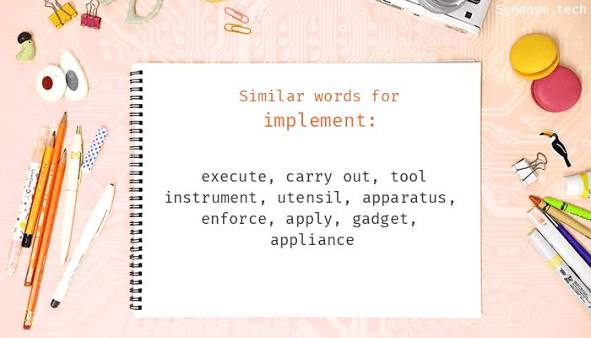
A company creates a plan.
The company approves the plan.
The company implements the plan.
Employees begin following the plan.
So, “implemented” often shows that a planned action has moved from an idea into real use.
Also read:Automatically Synonym: 30+ Useful Words and Phrases
📖 Implemented Definition
The basic definition of implemented is:
Put a plan, system, policy, strategy, or decision into operation.
Examples include:
- The company implemented a new policy.
- The school implemented a new program.
- The government implemented new regulations.
- The developer implemented a new feature.
- The manager implemented the recommended changes.
“Implemented” is generally used as a verb form, although a past participle can also appear in adjective-like constructions.
🔊 Implemented Pronunciation
In American English, “implemented” can be written in a simple pronunciation guide as:
IM-pluh-men-tid
The base verb “implement” has the stress on the first syllable in American English.
The basic forms are:
- Implement
- Implements
- Implemented
- Implementing
- Implementation
🔤 Syllables in Implemented
The word can be divided as:
im-ple-ment-ed
The base word is “implement,” with -ed added to form the past tense.
Examples:
implement → implemented
develop → developed
complete → completed
🧩 Word Forms of Implement
Understanding the different forms can make it easier to use synonyms correctly.
Implement
This is the base verb.
Example:
“The team will implement the strategy.”
Implements
This is the third-person singular present form.
Example:
“She implements new procedures.”
Implemented
This is the past tense and past participle.
Example:
“They implemented the policy last year.”
Implementing
This is the present participle or gerund form.
Example:
“They are implementing the new system.”
Implementation
This is the noun form.
Example:
“The implementation of the program took several months.”
Current dictionary references identify “implemented” as the past simple and past participle of “implement,” while “implementing” is the present participle and “implementation” is the related noun.
📖 30+ Synonyms for Implemented
Below are useful alternatives to “implemented.” The best choice depends on the sentence and the action being described.
1. Applied
Meaning: Put a method, rule, idea, or knowledge into practical use.
Examples:
- She applied the new method in class.
- The company applied the recommended process.
“Applied” is a good choice when something is being used in a real situation.
2. Carried Out
Meaning: Completed or performed a planned action.
Examples:
- The team carried out the plan successfully.
- The instructions were carried out carefully.
This is one of the most natural alternatives to “implemented.”
3. Executed
Meaning: Carried out a plan, strategy, or action.
Examples:
- The team executed the strategy successfully.
- She executed the project according to plan.
“Executed” sounds professional and is especially common in business writing.
4. Introduced
Meaning: Brought something new into use.
Examples:
- The company introduced a new policy.
- The school introduced a new learning system.
“Introduced” is useful when the main idea is bringing something new into an organization or environment.
5. Established
Meaning: Created or put something firmly in place.
Examples:
- The company established a new procedure.
- The organization established new safety standards.
This word works well when the implementation involves creating a lasting system or practice.
6. Enacted
Meaning: Made a law, rule, or formal measure official.
Examples:
- The state enacted a new law.
- Congress enacted new regulations.
“Enacted” is particularly useful in legal and government writing.
7. Enforced
Meaning: Made sure a rule or law was followed.
Examples:
- The agency enforced the new regulations.
- The school enforced its safety rules.
“Enforced” should not replace “implemented” in every situation because enforcement specifically involves making people follow a rule.
8. Deployed
Meaning: Put technology, software, equipment, or resources into use.
Examples:
- The company deployed the new software.
- The team deployed the updated application.
“Deployed” is especially common in technology and IT writing.
9. Activated
Meaning: Made something active or operational.
Examples:
- The system was activated yesterday.
- The company activated the new security feature.
This is useful when the main action involves making something start working.
10. Adopted
Meaning: Accepted something and decided to use it.
Examples:
- The company adopted a new strategy.
- The school adopted a new teaching method.
“Adopted” is related to implementation, but it focuses more on acceptance or choice.
11. Initiated
Meaning: Started a process or activity.
Examples:
- The manager initiated the project.
- The organization initiated several changes.
Use this when the main idea is beginning something.
12. Launched
Meaning: Started or introduced something officially.
Examples:
- The company launched a new program.
- The organization launched a new campaign.
“Launch” is common for programs, products, campaigns, services, and initiatives.
13. Instituted
Meaning: Formally introduced or established a system, rule, or practice.
Examples:
- The school instituted a new attendance policy.
- The company instituted new workplace procedures.
This is a more formal synonym.
14. Performed
Meaning: Carried out an action, task, or duty.
Examples:
- She performed the required task.
- The team performed the procedure correctly.
“Performed” works best when the focus is on completing an action rather than creating a system.
15. Conducted
Meaning: Organized and carried out an activity.
Examples:
- The researchers conducted the study.
- The company conducted a review.
“Conducted” is especially useful for research, surveys, meetings, investigations, and evaluations.
16. Fulfilled
Meaning: Completed or satisfied a requirement, promise, duty, or objective.
Examples:
- The company fulfilled the requirements.
- The organization fulfilled its obligations.
This is not always a direct synonym for implemented, but it can work when implementation means successfully completing an expected action.
17. Completed
Meaning: Finished something.
Examples:
- The team completed the project.
- She completed the required process.
“Completed” focuses on finishing, while “implemented” focuses on putting something into operation.
18. Realized
Meaning: Made an idea, goal, or plan become real.
Examples:
- The team realized its vision.
- The company realized its long-term strategy.
This can be useful in creative, business, and strategic writing.
19. Operationalized
Meaning: Turned an idea, concept, or plan into something that can be practically used or measured.
Examples:
- The researchers operationalized the concept.
- The organization operationalized its strategy.
This is a more advanced and formal word. It is common in academic, research, and professional contexts.
20. Integrated
Meaning: Combined something into an existing system or process.
Examples:
- The company integrated the new software.
- The developer integrated the new feature.
Use “integrated” when something becomes part of a larger system.
21. Installed
Meaning: Put software, equipment, or a system in place so it can be used.
Examples:
- The technician installed the new software.
- The company installed a new security system.
“Installed” is especially useful for hardware, software, and equipment.
22. Utilized
Meaning: Used something for a particular purpose.
Examples:
- The team utilized new technology.
- The company utilized available resources.
“Utilized” is more formal than simply saying “used.”
23. Organized
Meaning: Arranged and managed something in a planned way.
Examples:
- She organized the new workflow.
- The manager organized the project steps.
This is only a partial synonym because organizing does not necessarily mean putting a plan into action.
24. Arranged
Meaning: Planned or put things into a particular order.
Examples:
- They arranged the process carefully.
- She arranged the steps before starting.
“Arranged” is better when the focus is preparation or organization.
25. Followed Through
Meaning: Continued an action until it was completed.
Examples:
- She followed through on her plan.
- The team followed through with the project.
This phrase is useful when you want to emphasize commitment and completion.
26. Put Into Practice
Meaning: Used an idea, method, or theory in a real situation.
Examples:
- The students put the new method into practice.
- The company put its recommendations into practice.
This is one of the clearest everyday alternatives to “implemented.”
27. Put Into Action
Meaning: Made something happen through actual action.
Examples:
- The organization put the strategy into action.
- The team put the plan into action.
This phrase is easy to understand and works well in simple English.
28. Put Into Effect
Meaning: Made a rule, policy, decision, or plan active.
Examples:
- The government put the new policy into effect.
- The company put the decision into effect.
This is especially useful for formal policies and rules.
29. Put Into Operation
Meaning: Started using a system, process, or machine.
Examples:
- The company put the new system into operation.
- The facility put the equipment into operation.
This phrase works particularly well for systems and technical processes.
30. Delivered
Meaning: Successfully produced or provided a result, service, or outcome.
Examples:
- The team delivered the solution.
- The project delivered the expected results.
“Delivered” is useful when the important point is the result rather than the process.
31. Administered
Meaning: Managed, operated, or carried out a program or process.
Examples:
- She administered the program.
- The organization administered the new system.
This is common in government, education, healthcare, and organizational contexts.
32. Actioned
Meaning: Took action on something.
Examples:
- The request was actioned quickly.
- The team actioned the recommendation.
“Actioned” is used in some professional environments, but “acted on” or “carried out” may sound more natural in general American English.
33. Set Up
Meaning: Prepared or arranged something so it could be used.
Examples:
- They set up the new system.
- The team set up the process.
This is more conversational than “implemented.”
34. Brought Into Effect
Meaning: Made a rule, plan, or decision active.
Examples:
- The new policy was brought into effect.
- The changes were brought into effect gradually.
This has a formal tone and works well in official writing.
35. Put in Place
Meaning: Established something so it can operate or be used.
Examples:
- The company put new safety procedures in place.
- The school put a new system in place.
This is a natural and widely understood alternative.
🔍 Synonyms for Implemented by Tone
Different synonyms create different impressions.
Professional Tone
Good choices include:
- executed
- implemented
- established
- deployed
- operationalized
- instituted
- integrated
Example:
“The company deployed a new customer-management system.”
Formal Tone
Good choices include:
- instituted
- enacted
- operationalized
- established
- put into effect
- administered
Example:
“The agency instituted new compliance procedures.”
Simple Tone
Good choices include:
- used
- applied
- carried out
- put into action
- put into practice
- put in place
Example:
“The team put the new plan into action.”
Strong Action Tone
Good choices include:
- executed
- delivered
- launched
- deployed
- carried out
- accomplished
Example:
“The team successfully executed the business strategy.”
⚖️ Implemented vs. Close Alternatives
Choosing the right synonym means understanding the small differences between similar words.
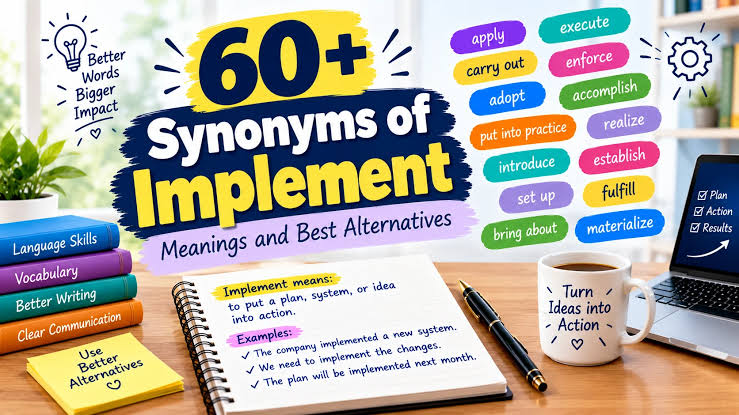
Implemented vs Executed
“Implemented” means something was put into operation.
“Executed” emphasizes carrying out the planned action.
Example:
“The company implemented a new strategy.”
“The company executed the strategy.”
Both can work, but the focus is slightly different.
Implemented vs Applied
“Applied” means something was used in a particular situation.
Example:
“The manager applied the new method.”
“Implemented” suggests the method or system was put into practical operation.
Implemented vs Enforced
“Enforced” means making sure a rule or law is followed.
Example:
“The school implemented a new policy.”
“The school enforced the new policy.”
The first describes putting the policy into operation. The second describes making sure people follow it.
Implemented vs Adopted
“Adopted” means accepted or selected for use.
“Implemented” means put into actual operation.
A company can adopt a policy today and implement it later.
Implemented vs Introduced
“Introduced” means brought something new into an environment.
“Implemented” means put it into operation.
Also read:Correct Synonyms: 30+ Useful Words (2026 Guide)
These words are often close but should not always be treated as identical.
Implemented vs Deployed
“Deployed” is especially useful for software, technology, systems, and resources.
Example:
“The development team deployed the application.”
“Implemented” can describe the work involved in creating or adding functionality, while “deployed” often focuses on releasing it for use.
🧠 When Should You Use “Implemented”?
“Implemented” is a good choice when you want to show that something planned has become active.
It works especially well with:
- policies
- strategies
- plans
- systems
- programs
- procedures
- recommendations
- changes
- reforms
- solutions
- technology
- processes
Examples:
“The company implemented a new employee policy.”
“The school implemented a digital learning program.”
“The developer implemented a new security feature.”
“The city implemented traffic improvements.”
These sentences are clear because the objects are things that can reasonably be put into action.
💼 Synonyms for Implemented on a Resume
Resume writing often requires strong action verbs.
Instead of repeating:
“Implemented…”
you can sometimes use:
- Executed
- Deployed
- Established
- Launched
- Introduced
- Integrated
- Applied
- Initiated
- Administered
- Coordinated
- Enforced
- Delivered
- Developed and deployed
- Designed and implemented
- Created and launched
For example:
“Implemented a new customer service process.”
Could become:
“Established a new customer service process.”
Or:
“Designed and launched a new customer service process.”
Or:
“Developed and deployed a new customer service process.”
The strongest version is not necessarily the most complicated one. The best resume verb is the one that accurately describes what you did.
📝 Synonym for Implemented in an Essay
In an essay, repetition can make your writing less interesting.
Instead of writing:
“The government implemented a new policy. The government implemented another program. The government implemented several reforms.”
You could write:
“The government introduced a new policy, launched another program, and established several reforms.”
This gives the paragraph more variety.
Useful academic alternatives include:
- applied
- introduced
- established
- enacted
- adopted
- carried out
- put into practice
- put into effect
- executed
However, do not replace “implemented” simply to make the sentence sound complicated.
💻 Synonyms for Implemented in Software Engineering
Technology writing often requires more precise vocabulary.
Depending on the action, you can use:
- developed
- coded
- integrated
- deployed
- configured
- installed
- enabled
- added
- launched
- activated
- built
For example:
“The developer implemented a new login feature.”
If the developer actually created the feature, “developed” may be appropriate.
If the developer added it to an existing system, “integrated” may be better.
If the feature was released to users, “deployed” may be more precise.
This is why technical writing benefits from choosing the exact action rather than automatically replacing every use of “implemented.”
🏢 Synonyms for Implemented in Business
Business writing often uses “implemented” for strategies, procedures, policies, systems, and organizational changes.
Useful alternatives include:
- executed
- established
- launched
- introduced
- adopted
- deployed
- applied
- initiated
- put in place
- put into effect
- carried out
Example:
“The company implemented a new sales strategy.”
Possible alternatives include:
“The company executed a new sales strategy.”
“The company launched a new sales strategy.”
“The company introduced a new sales strategy.”
Each sentence has a slightly different emphasis.
🏛️ Synonyms for Implemented in Government
Government documents frequently discuss policies, regulations, laws, programs, and reforms.
Useful words include:
- enacted
- introduced
- established
- enforced
- adopted
- administered
- put into effect
- carried out
Example:
“The state implemented new environmental regulations.”
Depending on the meaning, you might write:
“The state enacted new environmental regulations.”
Or:
“The agency enforced the new environmental regulations.”
These are not identical because enactment and enforcement describe different stages of a policy or legal process.
🎓 Synonyms for Implemented in Education
Schools and colleges may implement:
- teaching methods
- learning programs
- student policies
- assessment systems
- technology
- safety procedures
- curriculum changes
Possible alternatives include:
- introduced
- applied
- adopted
- established
- put into practice
- put into action
- launched
Example:
“The school implemented a new reading program.”
Alternative:
“The school introduced a new reading program.”
Another:
“The school put a new reading program into practice.”
🔧 Synonyms for Implemented in Technology
For technology-related writing, consider:
| If you mean… | Consider using… |
| Added a feature | added |
| Created software | developed |
| Released software | deployed |
| Combined systems | integrated |
| Installed software | installed |
| Made a feature active | activated |
| Set system settings | configured |
| Started a service | launched |
| Used a method | applied |
| Put a system into use | implemented |
This approach helps make technical writing more precise.
📊 Implemented vs Completed
These words are often confused.
“Implemented” means something was put into action.
“Completed” means something was finished.
For example:
“The company implemented the new system.”
This means the system was put into use.
“The company completed the project.”
This means the project was finished.
A project can be completed without being implemented, and something can be implemented while still requiring ongoing work.
🔄 Implemented vs Used
“Used” is a broad everyday word.
“Implemented” gives more information about the process.
Compare:
“The company used a new system.”
“The company implemented a new system.”
The second sentence suggests the company introduced and put the system into operation.
The first sentence only says that the company used it.
🧩 Implemented vs Established
“Established” focuses on creating or setting something up.
“Implemented” focuses on putting something into action.
For example:
“The company established a new department.”
This means the department was created.
“The company implemented a new department policy.”
This means the policy was put into use.
The words can overlap, but they emphasize different actions.
✍️ Examples of Implemented in Sentences
Here are simple examples using “implemented” naturally.
“The school implemented a new attendance policy.”
“The company implemented a flexible work schedule.”
“The manager implemented the recommended changes.”
“The city implemented a new recycling program.”
“The developer implemented a security update.”
“The hospital implemented a new scheduling system.”
“The team implemented the project plan.”
“The organization implemented several safety measures.”
“The government implemented new regulations.”
“The business implemented a customer feedback system.”
“The teacher implemented a new classroom strategy.”
“The company implemented better quality-control procedures.”
🗣️ Real-Life Mini Scenarios
Workplace
“We implemented a new employee training system last month.”
This means the company put the system into actual use.
School
“The teacher implemented a new reading strategy.”
This means the teacher began using the strategy.
Technology
“The development team implemented two-factor authentication.”
This means the feature was added and made functional.
Government
“The agency implemented new regulations.”
This means the agency put the regulations into practical operation.
Personal Goal
“I implemented a new study routine.”
This means the person began following the routine.
⚠️ Common Mistakes With Implemented
One common mistake is treating every related word as an exact synonym.
For example, “adopted” does not always mean “implemented.”
Another mistake is using “completed” when you actually mean “implemented.”
A third mistake is using “enforced” when you only mean “introduced.”
For example:
“The school implemented a new policy.”
This does not automatically mean the school strictly enforced it.
Another common issue is overusing “implemented” in a resume.
Using the word several times is not grammatically wrong, but changing the action verb when appropriate can make the resume more specific.
📝 Common Grammar Pattern
A common structure is:
Subject + implemented + object
Examples:
“The company implemented the policy.”
“The team implemented the strategy.”
“The school implemented the program.”
“The developer implemented the feature.”
You can also use passive voice:
“The policy was implemented by the company.”
“The program was implemented across several schools.”
Passive voice can be useful when the action is more important than the person who performed it.
🔍 What Is Another Word for Implemented?
The best general alternatives are:
- carried out
- executed
- applied
- introduced
- established
- deployed
- adopted
- initiated
- enacted
- put into action
- put into practice
- put into effect
- put in place
If you need one simple answer, “carried out” is one of the closest general alternatives.
If you need a professional resume word, “executed,” “deployed,” “established,” or “launched” may be better depending on the action.
📚 Synonyms for Implemented at a Glance
| Synonym | Best used for |
| Applied | Methods and knowledge |
| Carried out | Plans and tasks |
| Executed | Strategies and plans |
| Introduced | New ideas and policies |
| Established | Systems and procedures |
| Enacted | Laws and formal rules |
| Enforced | Rules and regulations |
| Deployed | Technology and software |
| Activated | Systems and features |
| Adopted | Policies and methods |
| Initiated | New activities |
| Launched | Programs and campaigns |
| Instituted | Formal systems |
| Integrated | Technology and systems |
| Installed | Software and equipment |
| Operationalized | Concepts and strategies |
| Realized | Goals and visions |
| Fulfilled | Requirements and obligations |
| Completed | Tasks and projects |
| Administered | Programs and processes |
| Put into practice | Methods and ideas |
| Put into action | Plans and strategies |
| Put into effect | Policies and decisions |
| Put into operation | Systems and processes |
| Put in place | Policies and procedures |
🎯 How to Choose the Right Synonym
The easiest way to select the right synonym is to ask what happened after the plan was created.
If the plan was performed, use carried out.
If the strategy was performed successfully, use executed.
If a method was used, use applied.
If something new was brought in, use introduced.
If a system was created and established, use established.
If a law became official, use enacted.
If a rule was actively enforced, use enforced.
If software was released, use deployed.
If an organization accepted a new approach, use adopted.
If a program officially began, use launched.
If a system became operational, use put into operation.
This method helps you choose a synonym based on meaning rather than simply replacing one word with another.
🌟 Why Synonyms for Implemented Matter
Using synonyms is not only about making writing sound different.
The right word can provide more information.
For example:
“The team implemented the software.”
This is general.
“The team deployed the software.”
This tells the reader more about the type of action.
Also read:Uplifting Synonym: 30+ Positive Words, Meaning, Examples, and Antonyms
Similarly:
“The company implemented a policy.”
“The company enforced a policy.”
The second sentence tells us that the company made sure people followed the policy.
Good vocabulary makes your writing more exact.
💡 Positive, Neutral, and Strong Alternatives
Some alternatives can create different impressions.
Positive or achievement-focused:
- delivered
- accomplished
- realized
- fulfilled
- successfully executed
Neutral:
- implemented
- applied
- carried out
- performed
- introduced
Formal:
- instituted
- enacted
- operationalized
- administered
- established
Technical:
- deployed
- integrated
- configured
- installed
- activated
Choosing the right tone can make your writing more effective.
🔤 Implemented vs Implementing
“Implemented” describes something that happened or was completed in the past.
Example:
“The company implemented the new system last year.”
“Implementing” describes an action that is happening now or is part of an ongoing process.
Example:
“The company is implementing the new system.”
So:
Implemented = already put into action
Implementing = currently putting into action
🔤 Implemented vs Implementation
“Implemented” is a verb form.
Example:
“The company implemented the policy.”
“Implementation” is a noun.
Example:
“The implementation of the policy was successful.”
The distinction is simple:
Implemented = what someone did
Implementation = the process of doing it
📖 Another Word for Implementation
If you need another word for implementation, useful choices include:
- execution
- application
- deployment
- adoption
- introduction
- establishment
- enforcement
- activation
- operation
- realization
- rollout
- execution process
- putting into practice
- putting into effect
Again, the best word depends on the context.
For software, “deployment” can be more precise.
For a strategy, “execution” may be more natural.
For a policy, “implementation” or “enforcement” may be appropriate depending on the meaning.
🏆 Best Synonyms for Implemented on a Resume
If your goal is professional resume writing, these are particularly useful:
Executed — for plans and strategies.
Deployed — for software and technology.
Established — for processes and systems.
Launched — for programs and initiatives.
Integrated — for systems and tools.
Introduced — for new procedures and policies.
Applied — for methods and techniques.
Initiated — for projects and activities.
Administered — for programs and operations.
Delivered — for solutions and results.
The most important rule is accuracy. Never use a stronger-sounding verb if it does not describe your actual work.
🧠 Final Tip for Using Synonyms
Do not change “implemented” simply because you think a synonym sounds more professional.
Sometimes “implemented” is the clearest and strongest word.
For example:
“The company implemented a new privacy policy.”
This sentence is direct and professional.
Replacing it with:
“The company operationalized a new privacy policy.”
does not necessarily make the sentence better. It may actually make it harder to understand.
Professional writing should be clear first.
A strong synonym is one that adds accuracy, not unnecessary complexity.
✅ Conclusion
Synonyms for implemented give writers more choices when describing plans, policies, systems, strategies, programs, and changes that have been put into action.
Some of the best alternatives include carried out, executed, applied, introduced, established, enacted, deployed, adopted, launched, integrated, and put into practice.
However, these words are not perfect replacements in every sentence.
“Executed” is often useful for strategies and plans.
“Deployed” works well for software and technology.
“Enacted” is useful for laws.
“Enforced” focuses on making rules followed.
“Adopted” focuses on accepting something for use.
“Introduced” focuses on bringing something new into an environment.
“Established” focuses on creating or setting something up.
The word “implemented” itself remains a strong and useful professional word. It means that something planned was put into operation or started being used. Current American English dictionary references support this core meaning and distinguish it from the noun “implement,” which can mean a tool or instrument.
The best writing does not simply use the biggest or most formal word. It uses the most accurate word.
If you want to say that a team carried out a plan, “carried out” may be perfect. If software was released for use, “deployed” may be more precise. If a law was formally made effective, “enacted” may be the better choice.
In short, learn the differences between these words instead of treating them as identical. That will make your essays, resumes, reports, professional documents, and everyday English clearer and more natural.
❓ Frequently Asked Questions About Synonyms for Implemented
What is the closest synonym for implemented?
“Carried out” is one of the closest general synonyms for implemented. Other strong choices include “executed,” “applied,” “put into action,” “put into practice,” and “put into effect.” The best choice depends on the object and context.
What is a professional synonym for implemented?
Professional alternatives include “executed,” “established,” “deployed,” “instituted,” “integrated,” “operationalized,” and “administered.” For a resume, the best choice should describe the specific work you performed rather than simply sound more formal.
Is “implemented” a positive word?
“Implemented” is generally neutral. It describes an action rather than automatically showing whether the result was good or bad. The surrounding sentence determines the tone. For example, “successfully implemented” gives it a clearly positive meaning.
Can “implemented” mean “completed”?
Not exactly. “Implemented” means something was put into action or operation, while “completed” means something was finished. A project can be implemented without every part of the larger project being completely finished.
What is the difference between implemented and deployed?
“Implemented” has a broad meaning and can describe putting a plan, system, policy, or feature into action. “Deployed” is more specific and is commonly used when software, technology, or resources are released or placed into use.