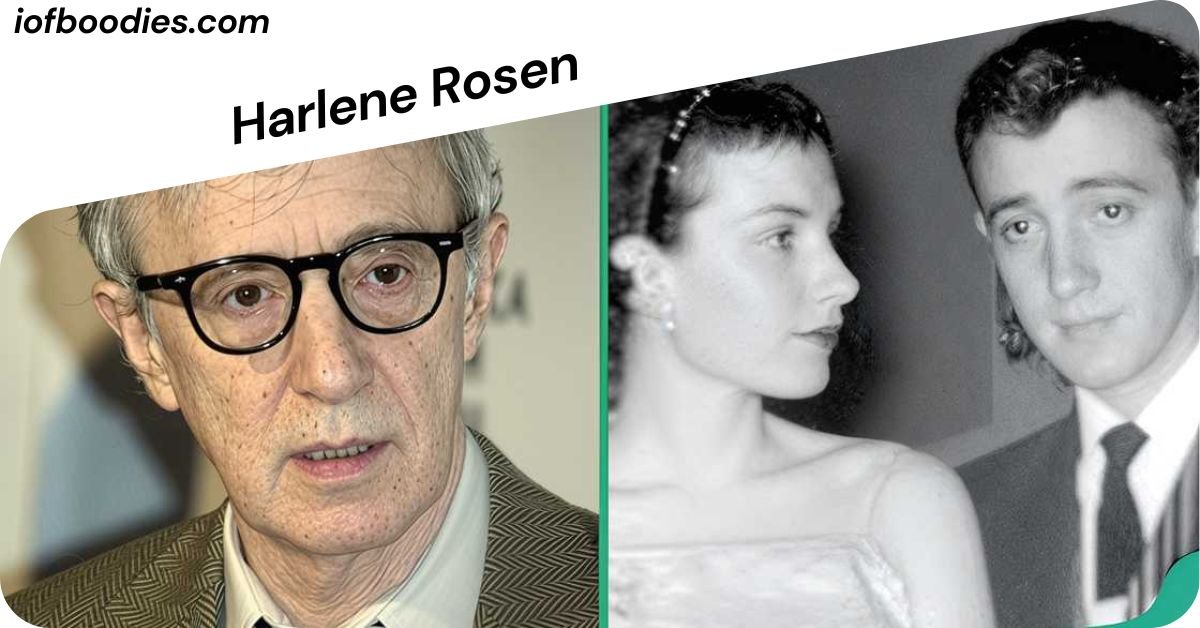
Harlene Rosen: The Story of Woody Allen’s First Wife, Marriage, Divorce, and Private Life
Harlene Rosen is best known as the first wife of American filmmaker, comedian, writer, and actor Woody Allen. Their relationship began long before Allen became an internationally known filmmaker. They were very young when they married, and their relationship ended before Allen’s major film career had fully developed.
For decades, Harlene Rosen remained largely outside the public eye. Unlike many people connected to famous entertainers, she did not build a public career around her former marriage. As a result, reliable information about her later life is limited.
Her name continues to appear in biographies and searches about Woody Allen because their early relationship was an important part of his personal history. It also became connected to Allen’s early comedy, a later legal dispute, and a rare public message Rosen provided many years after their divorce.
This article examines what is publicly documented about Harlene Rosen, her early life, marriage to Woody Allen, divorce, connection to Allen’s comedy, later appearance in biographical research, and the reasons her story remains interesting today.
It also separates established information from claims that are repeated online without strong evidence.
Who Is Harlene Rosen?
Harlene Rosen is primarily known as Woody Allen’s first wife. She married Allen in the 1950s, when both were still young and Allen was at the beginning of his career as a comedy writer.
Rosen was not a Hollywood actress or filmmaker. She did not become a celebrity in her own right. Much of what the public knows about her comes from biographies of Allen rather than from interviews or projects created by Rosen herself.
This is an important point when researching Harlene Rosen. Her public identity has largely been shaped by her connection to a much more famous person.
Some sources also identify her as Harlene Susan Rosen. However, available biographical records are not completely consistent about details such as dates, which means readers should be careful when treating every online biography as equally reliable.
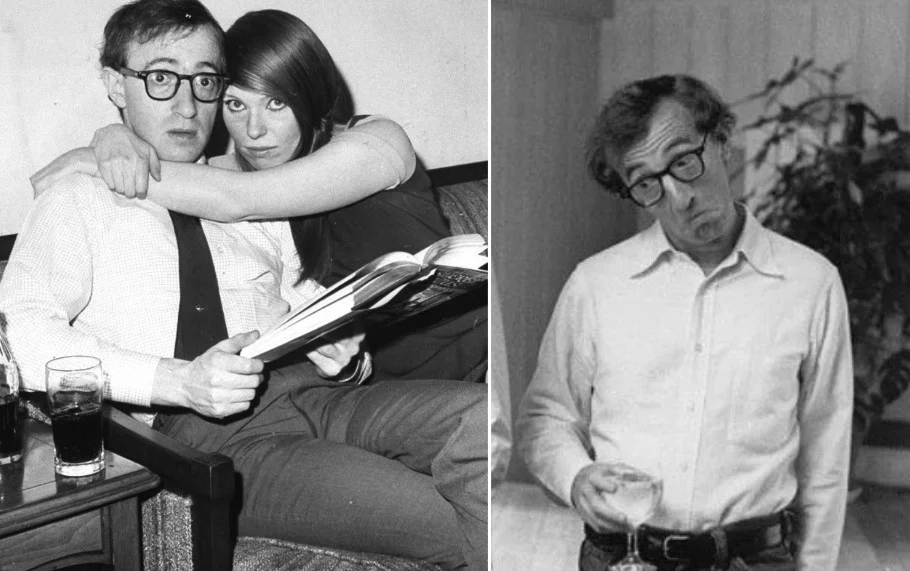
The most consistent information is that Rosen was Allen’s first wife, that they married while very young, that their relationship ended after several years, and that Rosen later lived a much more private life.
Harlene Rosen and Woody Allen: Quick Facts
| Topic | Publicly reported information |
| Name | Harlene Rosen, sometimes listed as Harlene Susan Rosen |
| Best known for | Being Woody Allen’s first wife |
| Husband | Woody Allen |
| Marriage | Began in the mid-1950s |
| Age at marriage | Both were teenagers or very young adults, depending on the source |
| Relationship outcome | Separation followed by divorce |
| Children together | No children are reliably documented from the marriage |
| Public career | No significant entertainment career is documented |
| Later public profile | Very private |
| Notable later event | She provided a message for David Evanier’s 2015 biography of Woody Allen |
The dates deserve special attention. Some sources list the marriage as 1956 to 1959, while other biographical records list the legal marriage as continuing until 1962. This appears to reflect a difference between the period when the couple separated or stopped living together and the later formal completion of the divorce. Time magazine’s 1972 profile also described the marriage as beginning when Allen was 19 and Rosen was 16 and discussed the marriage as lasting several years.
Because of these inconsistencies, it is more accurate to say that Rosen and Allen married in the mid-1950s, separated around the end of that decade, and had their divorce legally completed later.
Harlene Rosen’s Early Life
Very little reliable information about Harlene Rosen’s childhood is available in mainstream biographical sources.
This lack of information is not unusual. Rosen became known through her relationship with a future celebrity, but she did not become a celebrity herself. There was little reason for newspapers and entertainment publications to document her childhood, education, work, or private family life in the same detail they documented Woody Allen’s career.
Also Read: Calendar or Calender: Which Spelling Is Correct?
One detailed Guardian profile of Woody Allen described Rosen as the daughter of a shoe-shop owner and said that she was a philosophy student at Hunter College. The same account connected her with Allen’s intellectual development, noting that he became more interested in serious literature and philosophy during their relationship.
Other accounts have described Rosen as having an interest in music and playing piano around Allen’s early musical activities.
These details help create a more complete picture of the young woman behind the name. However, they should not be exaggerated. There is not enough reliable public evidence to construct a full biography of Rosen’s childhood or adult career.
How Harlene Rosen Met Woody Allen
Rosen met Woody Allen before he became one of the most recognized names in American cinema.
At the time, Allen was still developing his identity as a comedy writer and performer. He had begun writing jokes professionally while still very young and was building connections within New York’s comedy world.
Their relationship developed during a period when Allen was far removed from the image most Americans would later associate with him.
There was no established filmmaker known for films such as Annie Hall or Manhattan. There were no Academy Awards, international film festivals, or decades of press coverage surrounding his private life.
Instead, Rosen knew Allen as a young New Yorker who was trying to establish himself.
This context is important because it changes the way the marriage can be understood.
Harlene Rosen did not marry a famous Hollywood director. She married a young man whose career was still developing.
Why Their Young Marriage Attracted Attention
One of the most important facts about the Harlene Rosen story is the age of the couple.
Historical accounts consistently describe them as very young when they married. Time magazine reported that Allen was 19 and Rosen was 16 at the time, while other later sources have listed slightly different ages.
Modern readers may find such a marriage difficult to understand because social expectations surrounding teenage marriage have changed significantly.
In the United States during the 1950s, however, young marriage was more common than it is today. That does not mean every young marriage was successful. It simply provides historical context.
Rosen and Allen were still developing their education, careers, personalities, and adult identities.
That helps explain why their marriage later became difficult.
A Marriage Before Woody Allen’s Fame
The marriage took place before Allen’s major success in movies.
According to biographical accounts, Allen was already working in comedy and writing jokes for established performers. His career was growing, but he had not yet become the filmmaker associated with some of the most important American films of the 1970s and 1980s.
This means Rosen experienced a part of Allen’s life that is often overlooked.
She knew him before the public image was fully established.
That makes Harlene Rosen important to researchers studying Woody Allen’s early life. Her story provides a window into the period before his film career became the central part of his public identity.
Harlene Rosen’s Influence on Woody Allen’s Intellectual Development
One interesting part of Rosen’s story involves philosophy and literature.
The Guardian reported that Rosen studied philosophy and that Allen became interested in serious reading partly through his relationship with her.
Later interviews about Allen’s early life have also described his interest in philosophy and existentialist ideas.
This does not mean Rosen was responsible for Allen’s entire intellectual development. That would be too strong a conclusion.
However, the relationship appears to have exposed Allen to ideas and books that became important parts of his later public personality.
Allen’s films frequently dealt with questions about morality, relationships, anxiety, death, meaning, identity, and human behavior.
Those themes cannot simply be attributed to one person. Still, Rosen’s role in introducing or encouraging intellectual interests during his early adulthood is an interesting part of the historical record.
Why the Marriage Ended
The marriage was not successful.
Allen later described the relationship as unhappy and used the experience as material in his comedy. Historical accounts describe the couple as separating around 1959, while records that focus on the legal divorce give a later date, commonly 1962.
There is no need to reduce the breakup to one simple cause.
The couple married when they were extremely young. Allen’s career was changing quickly. Both people were still growing into adulthood.
A relationship that begins during the teenage years can change considerably as both individuals move into their twenties.
The available record also suggests that Allen’s growing career created a different lifestyle from the one they had when they married.
The important fact is that the relationship ended and that both eventually moved in different directions.
Harlene Rosen and the Divorce
The legal end of the marriage has been reported differently by different sources.
Some biographies say the marriage lasted from 1956 to 1959. Other records, including biographical databases, list the marriage as ending in 1962.
The most useful way to understand this difference is to distinguish separation from legal divorce.
A couple can stop living together or end their relationship before the legal paperwork is completed.
That appears to be the best explanation for the different dates found in historical accounts.
For SEO searches such as “when did Harlene Rosen divorce Woody Allen?” the safest answer is that the couple separated around 1959 and their legal divorce was completed later, with 1962 appearing in several biographical records.
Harlene Rosen and Woody Allen’s Early Comedy
Harlene Rosen’s name remained connected to Woody Allen even after their marriage ended.
The reason was comedy.
Allen became known for using his personal experiences as material. His early stand-up style often transformed relationships, anxiety, everyday frustrations, and personal problems into jokes.
His former marriage became part of that material.
Allen referred to Rosen with comic descriptions in his routines, and later comments about their marriage contributed to a public dispute.
This is one of the most important parts of the Harlene Rosen story because it shows the difference between private life and public entertainment.
For Allen, the relationship could become material for a comedian.
For Rosen, however, jokes about her were connected to real events in her personal life.
That difference eventually became legally significant.
The Defamation Dispute Involving Harlene Rosen
After the divorce, Rosen objected to public jokes and comments Allen made about her.
Historical accounts report that she brought a defamation lawsuit involving Allen and NBC and sought substantial damages. The case became part of the history of Allen’s early comedy career.
The dispute is sometimes described online using exaggerated or simplified language.
It is better to approach it carefully.
A comedian’s routine is not the same thing as a historical biography. Comedy depends on exaggeration, performance, timing, and audience expectations.
At the same time, a person who becomes the subject of a joke remains a real individual.
Rosen’s legal action demonstrates that she did not simply accept every public portrayal of herself.
The exact legal history is difficult to reconstruct from the many secondary accounts now available online. Some details, including dates and the eventual resolution, vary among sources.
For that reason, claims about the lawsuit should be treated as historical reporting rather than as a complete legal record unless supported by primary court documents.
Why the Lawsuit Matters Today
The dispute involving Harlene Rosen is more than an old celebrity story.
It raises questions that remain relevant in modern media.
How much of a private person’s life can be turned into entertainment?
When does a joke become harmful?
What happens when an entertainer has a much larger audience than the person being discussed?
And how should audiences separate a comedian’s version of events from independently documented facts?
These questions are especially important today because social media can spread personal stories much faster than television or newspapers could in the 1950s and 1960s.
The Harlene Rosen case provides an early example of the tension between comedy, privacy, reputation, and public attention.
Harlene Rosen’s Life After Woody Allen
One of the most common questions about Harlene Rosen is what happened after her divorce.
The honest answer is that very little is reliably documented.
This is an important distinction.
Many websites claim to know where Rosen lives, whether she remarried, whether she has children, what career she pursued, or what her daily life looks like.
Much of that information is not supported by strong public sources.
The more reliable historical record shows that Rosen largely stayed away from the entertainment industry and did not turn her connection to Woody Allen into a public career.
That privacy appears to have lasted for decades.
Why Harlene Rosen Is Called Woody Allen’s “Forgotten First Wife”
The phrase “forgotten first wife” is often used in online searches about Harlene Rosen.
The phrase makes sense from a popular-culture perspective.
When people discuss Woody Allen, they often remember his films, his later relationships, and his decades-long career.
His first marriage happened before he became internationally famous.
Rosen also did not remain in Hollywood.
As a result, she gradually disappeared from mainstream entertainment coverage.
The phrase should not be interpreted literally, however.
She was not completely forgotten.
Her name appears in biographies, historical profiles, interviews, and discussions of Allen’s early career.
A better description might be that she became an overlooked part of Woody Allen’s history.
Harlene Rosen’s 2015 Return to the Public Record
One of the most interesting developments in the Harlene Rosen story happened in 2015.
Writer David Evanier was researching his biography Woody: The Biography.
Evanier said that he spent more than a year trying to locate Rosen. He eventually succeeded and received a message from her that was included in his book.
This was significant because Rosen had remained out of public discussion for many years.
Her message was directed toward Allen around his 80th birthday.
Instead of focusing only on the painful parts of their past, Rosen remembered positive aspects of their young relationship.
She recalled his energy, creativity, and charisma. She also remembered going to movies together and making music.
Most importantly, she acknowledged that their marriage had been difficult while also recognizing that they had grown up together.
That is a much more complicated picture than the simple “bitter ex-wife” story sometimes presented online.
What Harlene Rosen’s 2015 Message Revealed
Rosen’s later statement is valuable because it gives her own perspective a place in the historical record.
For decades, much of the story had been told through Allen’s career and Allen’s comedy.
Her 2015 message offered another perspective.
She remembered the relationship as a mixture of positive and negative experiences.
There had been happiness and difficulty.
There had been love and disappointment.
There had also been personal growth.
That is an important lesson for anyone researching celebrity history.
A relationship can have multiple sides.
Two people can remember the same period differently.
And a person who was once hurt can later choose to describe the past without repeating every conflict.
David Evanier’s Role in Preserving Rosen’s Perspective
David Evanier’s biography is especially important in discussions about Harlene Rosen because he was able to include her voice after many years of silence.
The publisher’s material for the 2015 biography specifically highlighted Rosen among the people Evanier interviewed while researching Allen’s life.
Kirkus Reviews also noted Rosen’s participation in the biography and described her as one of Evanier’s interviewees.
This matters because biographies can sometimes repeat information from earlier biographies.
When a person who was directly involved provides new information, the historical record becomes more useful.
Rosen’s contribution does not automatically make every detail in the book unquestionable.
However, it does mean that her perspective should not be ignored when discussing her own life.
Did Harlene Rosen Have a Career in Hollywood?
There is no strong evidence that Harlene Rosen developed a major Hollywood career.
She is not known for acting in Woody Allen’s movies, directing films, writing screenplays, or becoming a television personality.
Also Read: Beginning or Begining: Which Spelling Is Correct?
Her connection to entertainment history comes mainly from her relationship with Allen.
This distinction is important for searchers who may encounter low-quality biographies suggesting that she was an actress or entertainment celebrity.
There is little reliable evidence for such claims.
Her story is interesting precisely because she did not follow the same public path as Allen.
Did Harlene Rosen and Woody Allen Have Children?
There is no reliable record of Harlene Rosen and Woody Allen having children together.
Their marriage was relatively short, and after it ended, Allen went on to have other relationships and marriages.
Because Rosen maintained a private life, online claims about her later family situation should be treated carefully.
It is better to say what is documented than to fill gaps in the historical record with assumptions.
Where Is Harlene Rosen Now?
This is one of the most searched questions about Harlene Rosen.
There is no well-established public record giving a detailed account of her current life.
Rosen has maintained a private existence for decades.
That means responsible articles should not publish an unverified address, personal contact information, private family details, or other information that could compromise her privacy.
Her lack of public appearances should not be treated as evidence of anything negative.
It simply indicates that she chose a life outside the entertainment spotlight.
Why So Little Is Known About Harlene Rosen
There are several reasons.
First, Rosen was not a celebrity when she married Allen.
Second, the marriage ended before Allen reached his greatest professional success.
Third, she did not pursue a public entertainment career.
Fourth, she generally avoided interviews and publicity.
Finally, older media coverage often focused on the famous person rather than the private individual connected to them.
This creates an interesting historical problem.
The person who became famous is heavily documented.
The person who shared the early years with that future celebrity may be barely documented at all.
Harlene Rosen is a good example of that imbalance.
Harlene Rosen and the Problem of Celebrity Biography
The story of Harlene Rosen raises a broader issue about how celebrity biographies are written.
When a famous person tells a story about a former spouse, the famous person’s version often receives more attention.
That is understandable.
The famous person has interviews, books, documentaries, television appearances, and a large media archive.
The former spouse may have none of those things.
As a result, one person’s perspective can become the accepted version.
Rosen’s appearance in Evanier’s 2015 biography helped correct that imbalance to some extent.
It did not rewrite history.
Instead, it added another voice.
That is valuable for anyone interested in accurate biography.
What Can Be Learned From Harlene Rosen’s Story?
There are several useful lessons.
The first is that people connected to celebrities are not automatically public figures themselves.
A famous person’s former spouse can have a legitimate interest in privacy.
The second is that early relationships can be very different from later relationships.
Rosen knew Allen before he became the famous filmmaker most people recognize today.
The third lesson concerns the limits of online information.
A search engine may return dozens of articles about Harlene Rosen, but repetition does not equal proof.
Many newer websites repeat the same claims without identifying where the information originated.
Readers should look for biographies, established publications, interviews, archival reporting, and primary records where possible.
How to Research Harlene Rosen Responsibly
People searching for Harlene Rosen should use several basic digital-literacy principles.
First, compare multiple sources.
If ten websites repeat the same sentence but all appear to have copied it from one another, they do not represent ten independent confirmations.
Second, check dates.
Older biographies sometimes contain different dates from modern databases. This is particularly relevant to the Rosen-Allen marriage.
Third, distinguish fact from commentary.
A phrase such as “forgotten first wife” is descriptive language, not a historical fact.
Fourth, be cautious with claims about private life.
If a website provides a precise home location, private contact information, or detailed family claims without a trustworthy source, that information should not automatically be believed or shared.
Harlene Rosen and Online Privacy
Rosen’s story is also relevant to modern privacy discussions.
Today, a person’s name can remain searchable for decades.
Personal information can be copied from one website to another and repeated until it appears authoritative.
This creates a special problem for people who were connected to celebrities but never wanted to become public figures.
For this reason, responsible research should focus on historically relevant public information.
There is a difference between studying a person’s role in cultural history and trying to uncover private information about their current life.
The first can be legitimate research.
The second can cross important ethical boundaries.
Why Harlene Rosen Still Appears in Search Results
Search interest in Harlene Rosen continues because Woody Allen remains an important and controversial figure in American entertainment history.
People researching his early life often encounter Rosen.
They may search for:
- Harlene Rosen biography
- Harlene Rosen and Woody Allen
- Woody Allen first wife
- Harlene Rosen marriage
- Harlene Rosen divorce
- Harlene Rosen 2015 message
- Harlene Rosen today
- Who was Woody Allen’s first wife?
- Did Woody Allen marry Harlene Rosen?
- When did Harlene Rosen and Woody Allen divorce?
These searches reflect historical curiosity more than evidence that Rosen has returned to public life.
Harlene Rosen Compared With Woody Allen’s Later Relationships
Harlene Rosen’s relationship with Allen was very different from his later relationships.
She was part of his life before he became a major filmmaker.
His later marriages and long-term relationships received much greater public attention because they occurred after his career had become established.
That difference helps explain why Rosen is sometimes absent from general discussions of Allen’s personal history.
Yet from a chronological perspective, she came first.
She was part of the period when Allen was becoming an adult and beginning his professional career.
The Importance of Avoiding Unverified Claims
Because Harlene Rosen lived privately, the temptation to fill gaps can be strong.
Some websites present exact claims about her age, occupation, finances, relationships, children, current location, or personal feelings.
Those claims should not automatically be treated as fact.
A high-quality biography should sometimes say, “This information is not publicly established.”
That is not a weakness.
It is a sign of responsible research.
In fact, acknowledging uncertainty is one of the best ways to follow the principles of trustworthiness and expertise in online publishing.
Harlene Rosen and the Meaning of a Private Life
The most unusual part of Rosen’s story may be what happened after the fame.
She could have used her connection to Allen to gain attention.
Instead, she largely remained private.
That decision is worth considering.
Modern celebrity culture often rewards people who remain visible.
Also Read: Tomorrow or Tommorrow: Which Spelling Is Correct?
Former spouses, friends, relatives, and colleagues can gain audiences by discussing famous people.
Rosen took a different route.
Her public record remained small.
The 2015 message to Evanier stands out precisely because it was unusual.
Her story therefore demonstrates that privacy can also be a form of personal choice.
A Balanced View of Harlene Rosen’s Legacy
Harlene Rosen’s historical importance does not come from having a large body of work.
She did not direct famous movies or publish bestselling books.
Her significance comes from her place in the early life of one of America’s most recognized filmmakers and comedians.
She was there before the fame.
She was part of the period when Allen was beginning his career.
She experienced the breakdown of their young marriage.
She later became connected to his comedy and a legal dispute.
And decades later, she provided a rare reflection on their shared past.
That is enough to make her story historically interesting without turning her into something she was not.
Frequently Asked Questions About Harlene Rosen
1. Was Harlene Rosen involved in Woody Allen’s film career?
There is no strong evidence that Harlene Rosen had a professional role in Woody Allen’s later film career. Their relationship occurred before Allen became a major filmmaker. Her importance to his biography comes mainly from their early marriage and her influence during his formative years.
2. Why is Harlene Rosen’s biography difficult to verify online?
Harlene Rosen lived privately and did not establish a large public career. Most information about her appears inside biographies and articles about Woody Allen. Because there are relatively few first-person interviews with Rosen, newer websites sometimes repeat information without clearly identifying its original source.
3. Did Harlene Rosen ever write a book about Woody Allen?
There is no well-established record of Rosen publishing a standalone book about her former husband. Her most notable later contribution was a message provided to biographer David Evanier for his 2015 book Woody: The Biography.
4. Why do sources give different dates for Harlene Rosen’s marriage to Woody Allen?
The main reason appears to be the difference between separation and legal divorce. Some sources describe the marriage as ending around 1959, while other biographical records list the legal marriage as ending in 1962. Readers should therefore avoid presenting one date without explaining the discrepancy.
5. Is Harlene Rosen still a public figure?
No significant current public role is documented. Rosen has largely remained outside entertainment media and has maintained a private life. The limited public record does not justify publishing unverified claims about her current location, family, finances, or daily activities.
Conclusion: What Harlene Rosen’s Story Tells Us
Harlene Rosen is remembered mainly as Woody Allen’s first wife, but describing her only that way leaves out much of what makes her story historically interesting.
She was a young woman who married Allen before his rise to international fame. Their relationship developed during an important period in his life, when he was moving from early comedy writing toward the career that would eventually make him one of America’s best-known filmmakers.
Their marriage was short-lived. They separated while still young, and the legal divorce was completed later. The relationship did not simply disappear after the divorce because Allen later used aspects of his personal life as comedy material. Rosen objected to public comments about her, leading to a legal dispute that became part of the history surrounding Allen’s early career.
For decades afterward, Rosen stayed largely out of the public eye.
That changed briefly in 2015, when biographer David Evanier located her while researching Woody: The Biography. Rosen provided a message for Allen’s 80th birthday that remembered both the good and difficult parts of their early relationship. Her words showed that the past was more complicated than the simple public image created by comedy routines and celebrity biographies.
The story of Harlene Rosen also offers a broader lesson about online research.
Not everything written about a little-known person is reliable simply because it appears on a website. Dates can conflict. Private details can be repeated without evidence. Comedy can be mistaken for biography. And a celebrity’s version of a relationship should not automatically be treated as the only version.
The most trustworthy approach is to focus on documented facts, acknowledge uncertainty, protect private information, and give people their own voice when that voice is available.
Harlene Rosen may have remained one of the lesser-known figures in Woody Allen’s biography, but she was not merely a footnote. She was part of his life before fame, part of an important period in his development, and eventually a rare independent voice in the historical record.
For readers searching for Harlene Rosen today, the most accurate conclusion is also the simplest: she was Woody Allen’s first wife, their young marriage ended after several difficult years, and she later chose a remarkably private life while Allen’s career became increasingly public.
That contrast between fame and privacy is perhaps the most enduring part of the Harlene Rosen story.